Lexus Fuel Pump Failure: Symptoms, Diagnosis and Replacement for In-Tank and High-Pressure Pumps
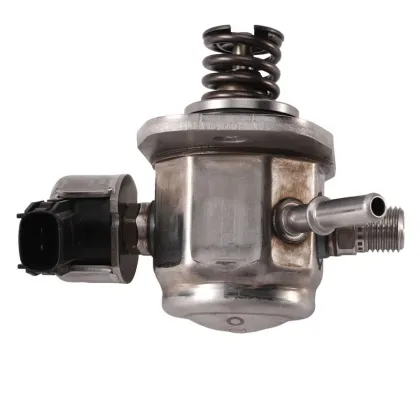
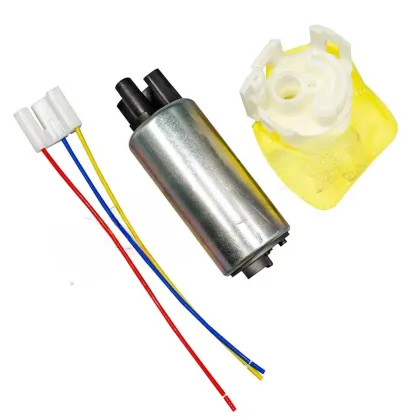
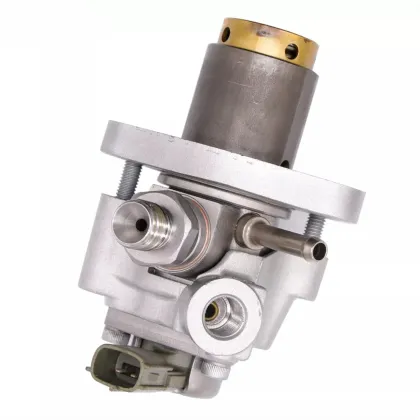
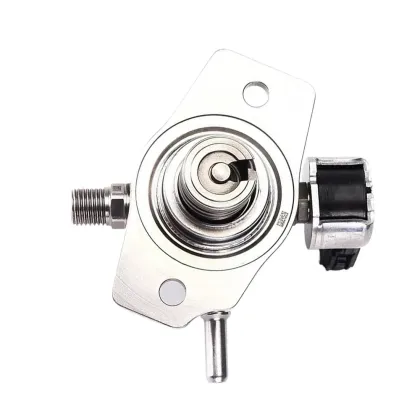
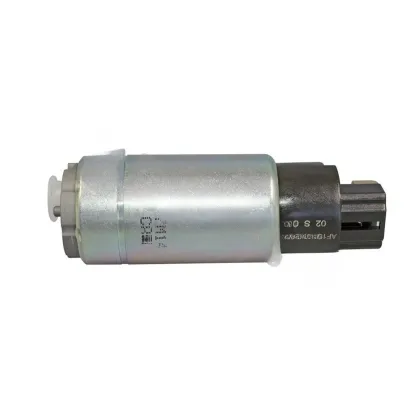
Two different fuel pumps on a modern Lexus
Every Lexus has an electric fuel pump inside the fuel tank. It pushes fuel forward at relatively low pressure. Engines with direct injection, which Lexus calls D-4S on many models, also have a high-pressure pump bolted to the engine. It is driven by a camshaft and raises the pressure far enough for the injectors that spray straight into the cylinders.
The two pumps fail in different ways and are different parts. Our Lexus listings include both: in-tank pumps for the LX 570 and for later ES, NX and RX models, and engine-mounted high-pressure pumps for many GS, IS, RC and NX models. Know which one you are dealing with before you order.
Symptoms of a failing pump
A weak in-tank pump usually shows up as:
- Long cranking or a crank-but-no-start, especially when the engine is hot.
- Stalling while driving, sometimes with warning lights, after which the engine will not restart.
- Sputtering or loss of power under load, uphill or at highway speed.
- A whine from the rear of the vehicle that is louder than before.
A worn high-pressure pump usually shows up as:
- A check engine light with a fuel pressure code such as P0087 (fuel rail pressure too low).
- Rough idle, hesitation or a lack of power, particularly under hard acceleration or turbo boost.
- Stalling or a hard start that gets worse as the problem progresses.
A low-pressure problem can set high-pressure codes, because the engine pump can only deliver what the tank pump supplies. Do not assume the engine pump has failed just from the code.
Check for recalls first
Toyota has recalled in-tank fuel pumps on many Lexus models. In 2020, recall 20V-012 and its expansion 20V-682 covered low-pressure pumps made by Denso whose impellers could deform and stop the pump. The affected vehicles include certain 2017–2020 ES 350, GS, IS, LC, LS, NX 300, RC, RX 350 and UX 200 models, plus the 2018–2019 GX 460 and LX 570. In 2026 Lexus announced another in-tank pump recall for some 2015–2022 RC, 2016–2020 GS and 2022 IS models, citing stalling and no-restart.
Enter your VIN at nhtsa.gov/recalls or ask a Lexus dealer before you buy anything. An open recall is repaired free of charge.
How to diagnose it
- Work safely. Gasoline is under pressure even with the engine off, and on direct-injection engines the high-pressure side is much higher. Keep sparks and flames away and relieve pressure by the factory procedure before opening any line.
- Read the codes and freeze-frame data with a scan tool. On direct-injection engines, live data shows commanded and actual fuel rail pressure, which tells you a lot about which side is weak.
- Check the fuel pump fuse, relay and wiring, and listen for the in-tank pump to prime when the ignition is switched on.
- Measure low-side fuel pressure with a gauge and compare it with the specification in your repair information, at idle and under load.
- If low-side pressure and volume are correct but rail pressure falls under load, suspect the high-pressure pump. If low-side pressure is low, fix the in-tank pump first.
Matching the pump: OEM number and VIN
Lexus numbers for in-tank pumps usually start with 23220, and numbers for engine-mounted high-pressure pumps start with 23100 or 23101. The right part depends on engine, drivetrain and production date, so confirm the number on your old pump or check your VIN in a Lexus parts catalog.
- 2322050271 (23220-50271): in-tank pump for the LX 570 (2008–2021, 5.7 L V8). It replaces 23220-50270 and is the pump itself, not the complete module with the level sender.
- 232200P240 (23220-0P240): in-tank pump with filter, listed for the ES 250 (2021–2024), ES 350 (2019–2024), NX 250, NX 350 and NX 350h (2022–2025), and RX 350 and RX 450h (2016–2022).
- 2310039645 (23100-39645): high-pressure pump listed for the GS 300 (2006), GS 350 (2007–2016), GS 450h, GS 460 (2008–2011), IS 250 (2006–2015), IS 350 (2006–2018) and AWD IS 300 (2016–2018). It replaces 23100-39615, and dealer catalogs now show 23100-39646 as its successor.
- 2310131090 (23101-31090): high-pressure pump for the 3.5 L V6 in the GS 350 (2016–2020), IS 350 and AWD IS 300 (2017–2024), RC 350 and AWD RC 300 (2016–2024). Dealer catalogs list 23101-0P020 as the newer number.
- 2310136080 (23101-36080): high-pressure pump for the 2.0 L turbo in the GS 200t, GS Turbo and GS 300, IS 200t, IS Turbo and RWD IS 300, RC 200t and RWD RC 300, and NX 200t and NX 300. Dealer catalogs list 23101-36090 as the newer number.
Check model years and engines in the fitment table on each product page, or browse all Lexus fuel pumps and the Lexus catalog.
Replacement overview, difficulty and safety
In-tank pump: intermediate. On many cars you reach it through an access cover under the rear seat. On some, including the LX 570, owners report either using a cabin access hatch or lowering the tank, so check the procedure for your VIN. The retaining ring is often tight and needs the right tool.
High-pressure pump: intermediate. It sits on top of the engine, driven by the camshaft, and has a high-pressure line to the fuel rail. Follow the factory steps for relieving pressure, installing and tightening the pump, and replacing seals. Some procedures call for a new high-pressure line or fittings once they have been removed.
- Work outdoors or in a well-ventilated area, with a fire extinguisher nearby.
- Disconnect the battery after relieving fuel pressure, and catch spilled fuel with rags.
- Keep everything clean. Dirt in the tank or in a high-pressure line can damage the new pump or the injectors.
- Prime the system with the ignition before starting, check every connection for leaks, then clear codes and test drive.