BMW High-Pressure Fuel Pump (HPFP) Failure Symptoms and Replacement
What the high-pressure fuel pump does
Most modern BMW gasoline engines use direct injection: fuel is sprayed straight into the cylinder instead of into the intake port. To do that against cylinder pressure, the engine needs fuel at far higher pressure than a conventional port-injected car. Two pumps share the job. The electric in-tank pump (often called the low-pressure pump) feeds fuel forward at a few bar. The high-pressure fuel pump, or HPFP, then raises it to the pressure the injectors need, roughly 100 to 200 bar (about 1,450 to 2,900 psi) depending on the engine and load.
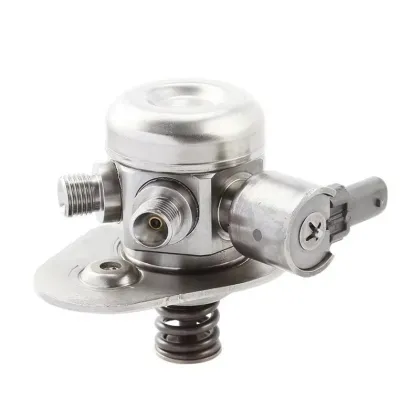
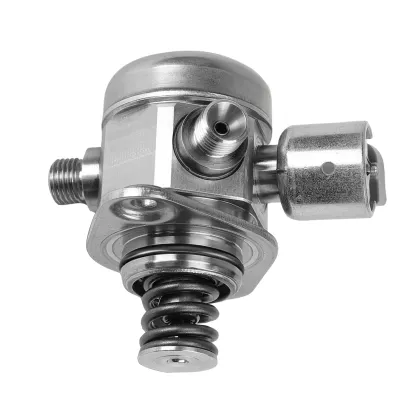
The HPFP is a small piston pump bolted to the engine, usually driven by a lobe on a camshaft. A solenoid valve inside it, controlled by the engine computer (DME), meters how much fuel is compressed. Because it is mechanical, dealing with heat, vibration and very high pressure, it is a known wear item on several BMW engine families, including the N54 and N55 six-cylinder turbo engines the N20 four-cylinder and the early N63 V8.
Common symptoms of a failing HPFP
A weak pump rarely fails all at once. Typical signs, roughly in order of how they show up:
- Long cranking before the engine starts, especially when hot or after sitting briefly.
- Rough idle, misfires or a stumble under hard acceleration, when fuel demand is highest.
- Loss of power or the car dropping into limp mode with an engine warning message.
- Stalling at idle or at a stop, sometimes followed by a normal restart.
- A new, louder ticking from the pump area at the rear of the cylinder head. Some ticking is normal for direct injection, so only a change from what the car used to sound like is meaningful.
- Poor fuel economy and hesitation that appear together with any of the above.
None of these is specific to the HPFP. Worn spark plugs, failing ignition coils, a weak in-tank pump or a leaking injector can look the same, which is why measurement matters before you buy anything.
How to diagnose it before you replace it
Start by reading the fault memory with a scan tool that can talk to the BMW DME, not only a basic code reader. Generic codes related to fuel rail pressure include P0087 (rail pressure too low) and P0088 (too high), and BMW engines also store their own manufacturer-specific fuel pressure codes. A “too low” code under load points toward the high-pressure side, but it can also mean the pump is not being fed properly.
A sensible order of checks:
- Check the low-pressure supply first. The in-tank pump and its control module must deliver steady pressure; if they do not, the HPFP cannot work properly. See our guide to the BMW fuel pump control module.
- Look at live data: compare actual rail pressure with the target while cranking, idling and under load. A pump that cannot reach target, or that lags badly, is the usual finding.
- Inspect the pump’s drive. Many engines run the pump from a roller follower on the camshaft. A worn follower or a scored camshaft lobe is a reason to stop and fix that first.
- Look for fuel smell, wetness or seepage around the pump and lines, and check for a rough-running cylinder separate from the fuel system (plugs and coils).
- Rule out a failing rail pressure sensor if readings are erratic or implausible.
If you are unsure, a specialist shop can test rail pressure with the engine running and give you a clear answer.
Choosing the right pump: OEM number and VIN
BMW fits different pumps to different engines, and even the same model can have two versions over its production run. Do not buy by model name alone. Use the numbers:
- The OEM number is an 11-digit BMW part number that begins with 13 51 for these pumps. It is often on a label or cast into the housing of your existing pump.
- Your VIN lets a BMW parts catalog (or a dealer parts desk) show the exact number for your build date and engine. Please verify the OEM number against your VIN before ordering.
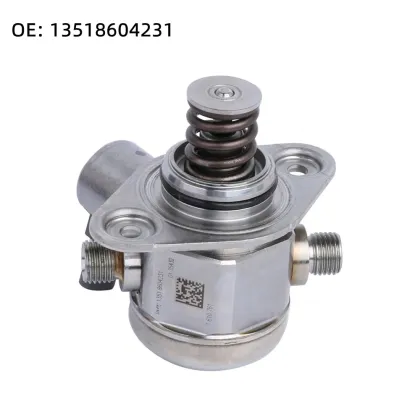
- Engine code matters. In our catalog, 13518604231 is the N55 pump (135i, 335i, 435i, 535i and X5 35i, among others), 13518604229 is the pump for the four-cylinder N20/N26 (228i, 320i, 328i, 428i and others), and 13517595339 is the early N63 V8 pump (550i, 650i, 750i), fitted one per cylinder bank, so a V8 needs two. Each product page shows the full fitment table.
Earlier N54 cars (2007–2010 335i and 135i) use a different pump, so check the listing’s fitment table instead of assuming. Early-build N55 and N20 cars may also need an updated wiring adapter or kit with the newer pump, so ask before ordering. If your number is not listed, use our fuel pump category or search by OEM number.
Replacement overview, difficulty and safety
Difficulty: intermediate to advanced. The job is mostly bolt-on, but it involves fuel under high pressure and sometimes tight access. Plan roughly two to four hours for an experienced home mechanic, depending on the engine. If you have never worked on a fuel system, a shop is the safer choice.
- Gasoline is flammable. Work outdoors or in a ventilated space, away from ignition sources, with a suitable fire extinguisher nearby. Wear eye protection.
- Disconnect the battery and relieve fuel pressure as the factory procedure directs. The high-pressure side can hold pressure after the engine stops; never loosen high-pressure fittings on a hot or pressurized system.
- Inspect the camshaft roller follower or tappet and replace it with the pump if worn, along with any seals or gaskets the pump uses, as the factory parts list calls for. Reusing a worn follower can damage the new pump quickly.
- Use new O-rings, torque fasteners to specification and use fuel-line fittings as directed. Do not substitute generic hose.
- After installation, turn the ignition on to let the low-pressure side prime, start the engine, and check for leaks and fault codes. Clear codes and confirm that rail pressure matches the target.
Some BMWs may need the engine to be adapted or the pump to be registered with diagnostic software after replacement, so ask before you start. BMW has extended warranty coverage on the HPFP for some N54 cars in the past and has issued other service campaigns on fuel pumps. A dealer can look up whether anything applies to your VIN.
OEM versus aftermarket: an honest view
A high-pressure pump is a precision part, so quality varies. The parts in our catalog are aftermarket replacements listed against the BMW OEM numbers shown; they are not genuine BMW parts, and we do not claim otherwise. Genuine BMW and the original-equipment suppliers who build for BMW usually cost more and carry the strongest track record. Aftermarket pumps can be a reasonable repair on an older car where the budget matters, but you are accepting more uncertainty about longevity.
Whichever you choose, match the OEM number exactly, replace the follower, confirm the low-pressure system is healthy, and keep your receipt and the removed part until the repair has proven itself.