Audi Transmission Oil Cooler Leak: Symptoms, Diagnosis and Replacement
What the transmission oil cooler does
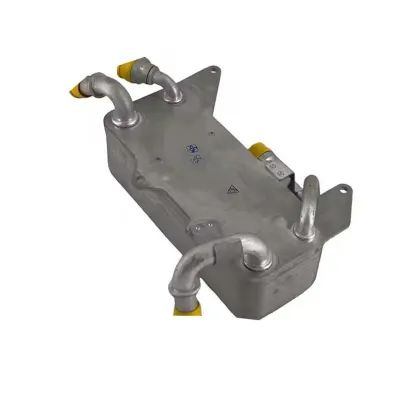
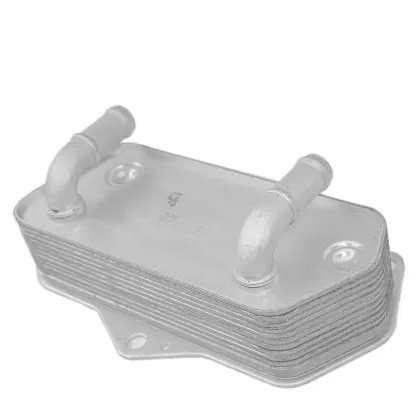
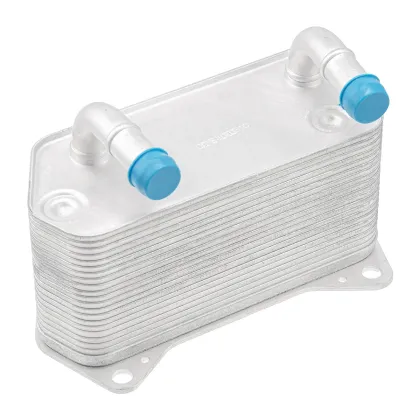
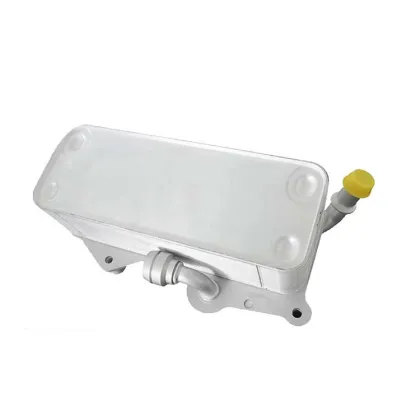
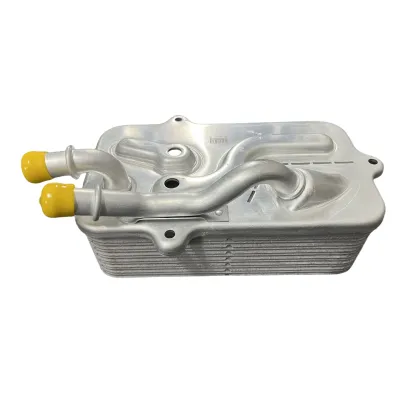
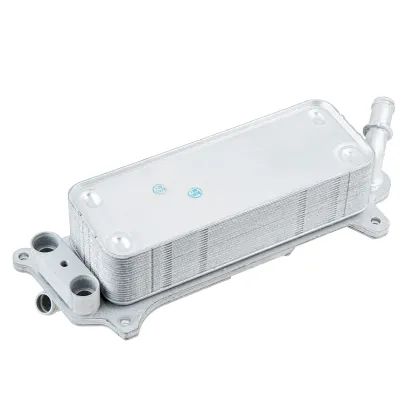
Audi automatic and dual-clutch transmissions make heat, from the torque converter or the wet clutches and from the gears themselves. On the cars covered here, that heat goes into a compact heat exchanger mounted on or next to the transmission. Transmission fluid flows through one side and engine coolant through the other, so the coolant carries heat away from the fluid and also helps the fluid reach working temperature faster.
The cooler is joined to the transmission and the cooling system by seals, O-rings and short lines. Those joints can seep with age, and the thin plates inside can corrode or crack. An external leak loses fluid. An internal leak lets coolant and transmission fluid mix, and coolant in the fluid can damage clutches, seals and, on dual-clutch gearboxes, the mechatronic control unit.
Symptoms of a leaking transmission cooler
- Transmission fluid dripping from the cooler or its lines, or a wet, oily area on the side of the gearbox.
- Coolant loss with no visible leak, or coolant residue on the cooler.
- A reddish or brown oily film in the coolant expansion tank.
- Transmission fluid that looks pink, milky or foamy instead of clear.
- Harsh, delayed or erratic shifts, slipping or shuddering.
- A transmission warning, a reduced-performance or limp mode, or stored transmission faults.
If you suspect that coolant has entered the transmission, stop driving the car and have it checked. Driving with contaminated fluid can turn a cooler replacement into a transmission repair.
How to diagnose it
- Let the engine and transmission cool down. Coolant and transmission fluid get hot enough to burn, and the cooling system is pressurized.
- Raise the car only on a lift or on solid jack stands on level ground. Never work under a car held only by a jack.
- Clean the cooler, its lines and the nearby transmission case, then drive and inspect again to find where the fresh fluid appears. Line O-rings and fittings can leak without the cooler itself being faulty.
- Check the coolant in the expansion tank for an oily film, and take a fluid sample from the transmission to look for a milky or pink color.
- Pressure-test the cooling system. A pressure drop with no visible leak, together with contaminated fluid, points to an internal cooler leak.
- Read the transmission control unit with an Audi-capable scan tool for stored faults and fluid temperature. A fluid analysis lab can confirm glycol in the transmission fluid.
Make sure the contamination is transmission fluid, not engine oil. Engine oil in the coolant points to the engine oil cooler instead; see the Audi engine oil cooler guide.
Matching the part: OEM number and VIN
Transmission coolers differ by transmission type and engine, even within one model. The first characters of some numbers point to the gearbox: 02E is the six-speed DSG (S tronic) dual-clutch transmission. Verify the number against your VIN before you order.
- 02E409061B (02E 409 061 B) is the DSG cooler listed for the 2006–2013 A3, 2008–2015 TT and TT Quattro and the TTS Quattro, and 02E409061C is listed for the 2009–2010 TT, TT Quattro and TTS Quattro.
- 09E409061 is listed for the six-speed automatic in the 2005–2010 A8 (4.2 L V8 and 6.0 L W12) and the 2007–2009 S8 with the 5.2 L V10.
- 4H0317021R is listed for the 2012–2014 A6 (2.0 L, 3.0 L and 3.0 L TDI), the 2011–2014 A8 and the 2013–2014 S8.
- 4G0317021AG is listed for the 2012–2015 A6 and A6 Quattro with the 2.0 L four-cylinder.
- 4G0317021AF is listed for the 2013–2018 S6 with the 4.0 L V8.
Browse all transmission oil coolers or the Audi catalog. Each product page lists models, years and engines.
Replacement overview, difficulty and safety
Difficulty: intermediate. The cooler is usually bolted to the transmission with a few fasteners and connected to two coolant hoses or lines, but access from below can be tight, and you need to handle two fluids and refill both correctly.
- Disconnect the battery if you have to unplug sensors or connectors near the cooler.
- Catch the coolant and transmission fluid in separate clean pans, and plug the openings so dirt cannot get into the transmission.
- Fit new seals and O-rings, and clean the mating surfaces carefully.
- Top up the transmission with the fluid Audi specifies for your gearbox. The level is checked at a specified fluid temperature with the engine running, usually with a scan tool, so follow the service information or let a shop do it.
- Refill and bleed the cooling system as the service information directs, then check for leaks and re-check both levels.
- If coolant got into the transmission, the fluid has to be changed, more than once if needed, and the filter replaced where the gearbox has one. Have the transmission evaluated before you rely on it.
Genuine versus aftermarket
The coolers in our catalog are aftermarket replacements listed against the Audi OEM numbers shown, not genuine Audi parts. Genuine coolers have the most consistent record. An aftermarket cooler can be a sensible option on an older car if the number matches exactly and you use new seals and the correct fluids. Ask us to confirm fitment for your VIN before you order.