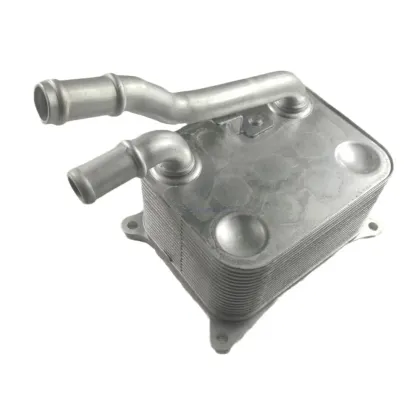
Audi Engine Oil Cooler Leak: Oil in the Coolant, Coolant in the Oil and How to Fix It
What the engine oil cooler does
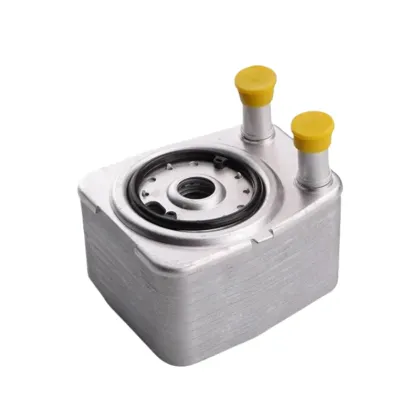
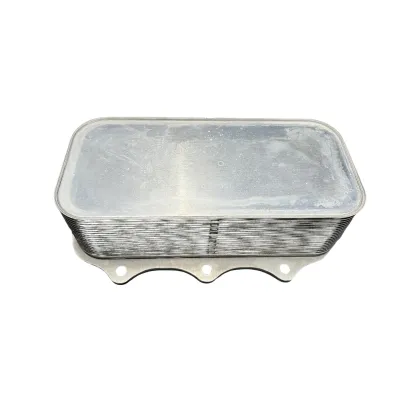
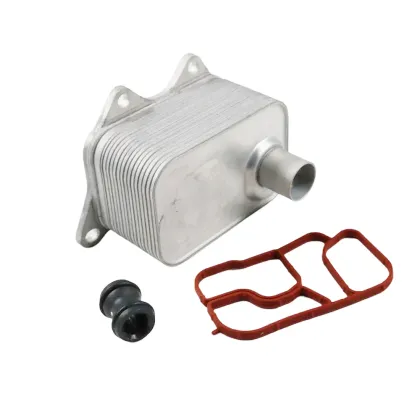
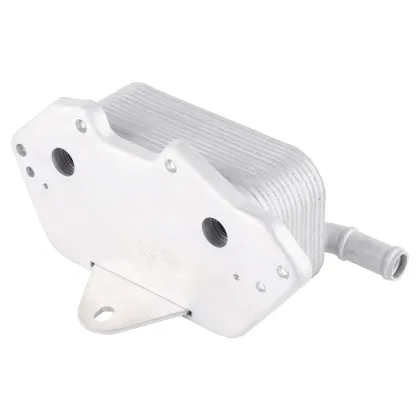
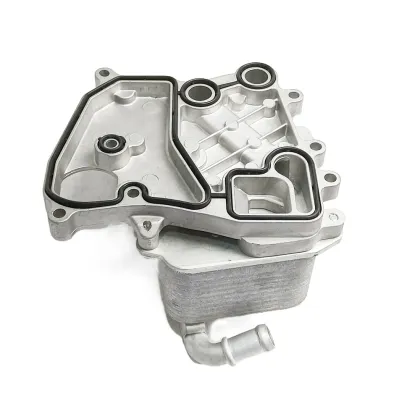
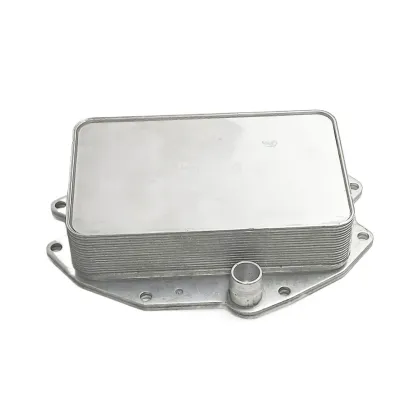
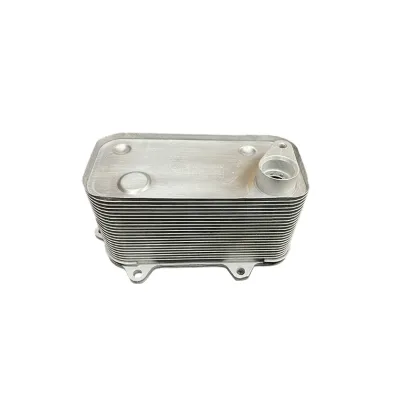
Most Audi engines use an oil-to-coolant heat exchanger as the engine oil cooler. It is a stack of thin plates, usually bolted to the oil filter housing or next to it. Engine oil flows through one set of passages and engine coolant through the other, so the coolant carries heat away from the oil and also helps warm the oil faster after a cold start.
Because oil and coolant pass each other inside the same part, separated only by thin plates and seals, a failure can let them mix. That is what makes an oil cooler leak more serious than an ordinary drip: oil contaminates the cooling system, and coolant in the oil destroys its ability to lubricate the bearings.
Symptoms of a leaking oil cooler
- Brown or black oily sludge, or an oily film, in the coolant expansion tank. Owners often describe it as a milkshake.
- Milky or light-brown residue on the dipstick or under the oil filler cap, or an oil level that rises between changes.
- Coolant loss with no visible external leak.
- Oil or coolant dripping from the area around the oil filter housing, or a coolant smell after a drive.
- Overheating or poor cabin heat once oil has coated the inside of the radiator and heater core.
- An oil level or oil pressure warning if the oil has been badly diluted.
If you see oil and coolant mixed, do not keep driving. Coolant in the oil can damage the crankshaft and rod bearings quickly.
How to diagnose it
Oil in the coolant is often blamed on the head gasket, but on Audi engines a failed oil cooler is a frequent cause, and it is a much smaller repair. Other causes to rule out include a failed head gasket and, on the supercharged 3.0 L V6, leaking charge air cooler cores inside the supercharger, which let coolant into the intake. A light milky film under the oil cap on a car used for short trips can also be condensation rather than a leak.
- Let the engine cool completely. Do not open the expansion tank on a hot engine, and keep skin away from hot oil.
- Look at the coolant in the expansion tank and at the oil on the dipstick and under the cap. Note which fluid is contaminated.
- Clean the area around the oil filter housing and cooler, then run the engine and look for fresh wetness. Fluorescent dye and a UV lamp help on a dirty engine.
- Pressure-test the cooling system. A pressure drop with no external leak points to an internal leak.
- Have a combustion leak (block) test done on the coolant. Combustion gases in the coolant point to the head gasket rather than the oil cooler.
- If the result is still unclear, an oil analysis lab can confirm whether glycol is present in the oil.
Matching the part: OEM number and VIN
Audi oil coolers are engine-specific, and some numbers are shared with Volkswagen and other group brands. Check the number on your old cooler and verify it against your VIN before you order.
- 06J117021Q (06J 117 021 Q) is listed for the 2.0 L four-cylinder in the 2009–2013 A3, 2009–2016 A4, 2010–2017 A5, 2012–2015 A6, 2013–2016 allroad, 2015–2018 Q3, 2011–2017 Q5 and 2009–2015 TT.
- 06E117021L is listed for the V6: the 3.2 L A4, A5 and A6 of 2005–2011, and the 3.0 L supercharged A6, A7, A8, Q5, Q7, S4, S5 and SQ5 up to 2017.
- 06M117015M is listed for the newer 3.0 L V6 in the 2018–2025 S4, S5 and SQ5 and the 2019–2025 A6, A7, A8, Q7 and Q8 mild hybrids.
- 059117015P is listed for the 3.0 L TDI diesel in the 2014–2016 A6, A7, A8 and Q5 and the 2010–2015 Q7.
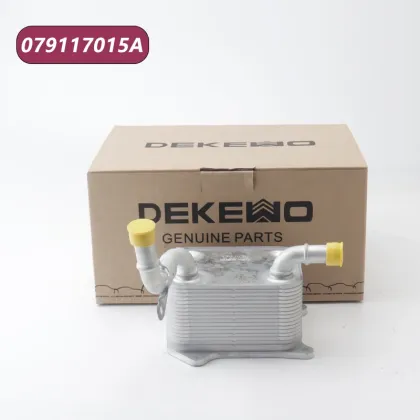
- 079117015P and 079117015B are listed for the 4.2 L V8 (A6, A8, Q7, RS4, RS5, S5); 079117015P also covers the 6.3 L W12 A8.
- 0P2117015 is listed for the 4.0 L twin-turbo V8 mild hybrid of 2019–2025 (A8, S8, RS6 Avant, RS7, RS Q8, SQ7, SQ8).
- 07C117037L is listed for the 2005–2007 A8 with the 6.0 L W12, and 038117021E for certain A3, TT and Q7 models; check its fitment table closely.
Browse all engine oil coolers or the Audi catalog. If the fluid in the coolant is reddish transmission fluid rather than engine oil, see the Audi transmission cooler guide.
Replacement overview and cleanup
Difficulty: intermediate on the 2.0 L four-cylinder, where the cooler sits near the oil filter on the side of the block. On the V6, V8 and W12 engines access is tighter, and other components may have to come off first. The cooler itself is the easy part; cleaning up after an internal leak is what takes time.
- Work on a cold engine, with the car safely supported on stands if you work underneath. Never rely on a jack alone.
- Drain the coolant into a clean pan and catch any oil. Dispose of both at a recycling point.
- Replace the cooler with new gaskets or O-rings, and clean the mating surfaces without scratching them.
- If oil got into the coolant, flush the cooling system repeatedly until the water runs clean. Oil residue in the expansion tank, radiator and heater core can cause overheating later; many owners replace the expansion tank.
- If coolant got into the oil, change the oil and filter, and consider a second change after a short drive.
- Refill with the coolant Audi specifies, bleed the system as the service information directs, and check both fluids again after the first drives.
If the engine ran for long with coolant in the oil, have a shop assess it before you invest in further repairs.
Genuine versus aftermarket
The coolers in our catalog are aftermarket replacements listed against the Audi OEM numbers shown, not genuine Audi parts. Genuine coolers and seals have the most predictable record. An aftermarket cooler can be a reasonable choice for an older car if the number matches exactly and you fit new seals. Ask us to confirm the number for your VIN before you order.