Audi FSI and TFSI High-Pressure Fuel Pump: Failure Symptoms and Replacement
What the high-pressure fuel pump does
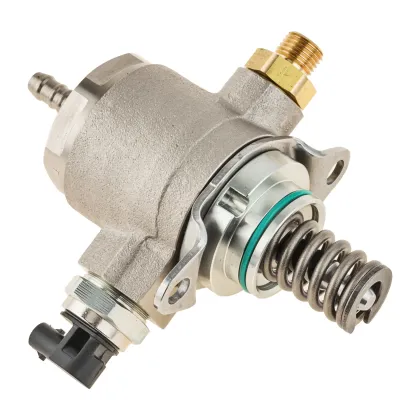
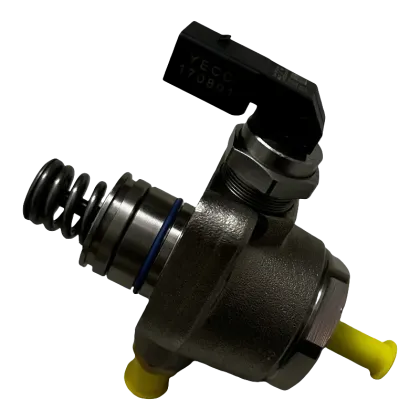
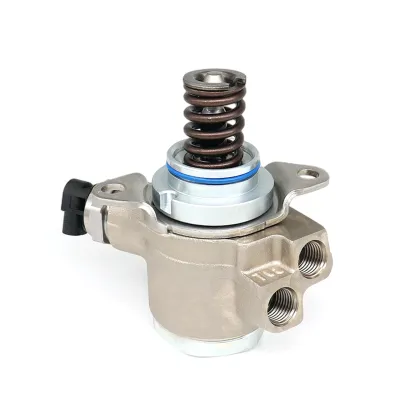
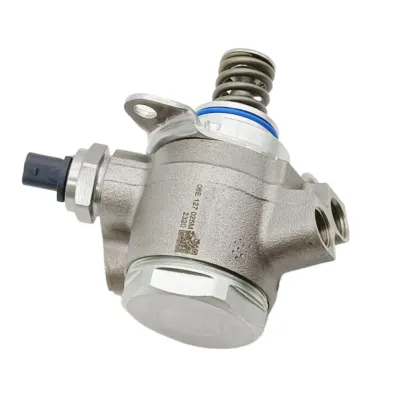
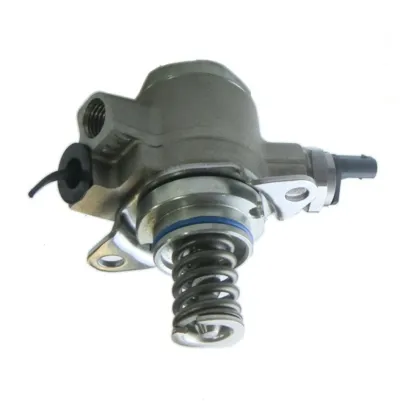
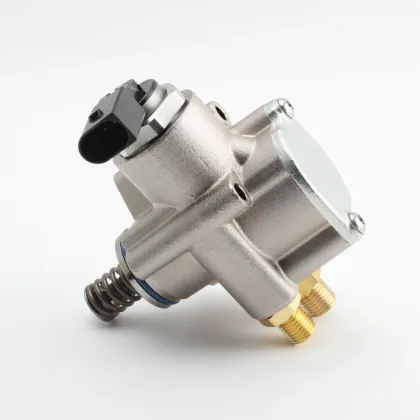
Audi’s FSI and TFSI engines inject fuel directly into the cylinders, which takes far more pressure than a port-injected engine. An electric pump in the tank supplies fuel at low pressure. A mechanical high-pressure fuel pump bolted to the engine then raises it to the working pressure of the injection rail, which can reach well over 100 bar (about 1,450 psi) and in some engines considerably more.
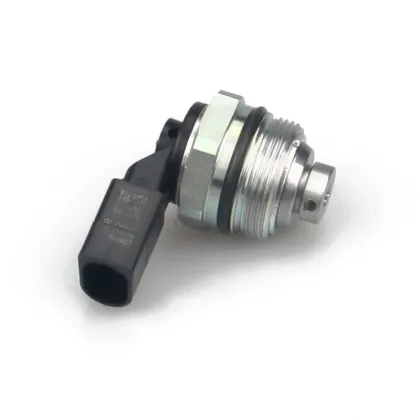
On many of these engines the pump is driven by a lobe on the camshaft through a small roller follower, and a solenoid valve controlled by the engine computer meters the fuel it delivers. It is a precision part under heavy load, and it is a known wear point on the VW-Audi group’s direct-injection engines.
Failure symptoms
- Long cranking before the engine starts, especially hot or after a short stop.
- Rough running, misfires or hesitation during acceleration, when fuel demand is highest.
- Reduced power and a warning light, sometimes with a limp-home mode.
- Intermittent stalling at idle or at low speed.
- A new loud ticking or knocking from the pump area on the cylinder head. Some tick is normal for direct injection, so look for a change.
- Fuel smell, or oil in the area of the pump if the drive seal leaks.
These signs can also come from bad coils or plugs, a weak in-tank pump, a clogged filter, a leaking injector or a faulty rail pressure sensor, so test first.
Diagnosis: pressure data, codes and the cam follower
Use a scan tool that reads Audi engine data. Common generic codes include P0087 (fuel rail pressure too low) and P0088 (too high). Audi also stores its own codes for the pressure regulator valve and the rail pressure sensor. Then work through the system:
- Check low-pressure supply first. If the in-tank pump is weak, the high-pressure pump cannot fill. See our Audi A4 fuel pump guide for that side.
- Compare commanded and actual rail pressure in live data, at idle and under load. A pump that cannot follow the target is a prime suspect.
- Remove the pump drive follower for inspection when you take the pump off, or inspect it earlier if you have access. A follower worn flat or a scored cam lobe is common on engines with this design, and a worn follower can destroy the pump and the cam lobe.
- Inspect the pump for leaks, and look at the wiring and connector of the regulator valve.
- Rule out the rail pressure sensor if values are erratic.
Many mechanics inspect or replace the follower at regular intervals on these engines. Follow the interval and procedure in your repair information.
Finding the right pump: OEM number and VIN
Audi’s pump number depends on the engine family, not just the model. One A4 or A6 can have several variants by engine and year, and a pump from an older version of the same engine is often not a drop-in swap. Check the number on your old pump and verify it against your VIN in an Audi parts catalog before ordering.
- 06J127025L is listed for B8 A4 and A5 models with the early-generation 2.0 L TFSI four-cylinder (EA888, engine codes such as CAEB, CDNB and CFKA). Earlier B7 A4 2.0 TFSI engines use a different 06F-series pump.
- 06L127025T is listed for the 2015–2017 A3 and A6 with the later 2.0 L four-cylinder. The 06L series is the pump for the newer 2.0 TFSI generation.
- 07L127026AL is listed for the supercharged 3.0 TFSI V6 in the S4, S5, A6, A7, Q5 and Q7, roughly 2010–2017. It sits on the left cylinder head.
- 06E127025AC and 06E127025M are listed for 3.2 FSI V6 models such as the A4, A6 and Q5; check the engine code (for example CALA).
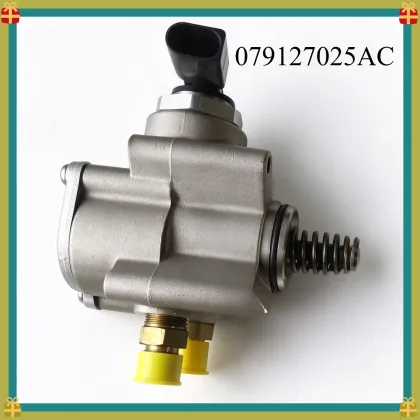
- 079127025AC and 079127026AC are listed for 4.2 FSI V8 cars including the R8, A6, A8 and S5 (the V8 has one pump per cylinder bank).
Open each listing for the full fitment table, and browse Audi fuel pumps if you need the in-tank assembly.
Replacement overview, difficulty and safety
Difficulty: intermediate to advanced, depending on the engine. On four-cylinder engines the pump is on the cylinder head under the intake area; on V6 and V8 engines access can be tighter. Expect two to four hours for an experienced home mechanic.
- Gasoline is flammable and the rail holds high pressure. Work in a ventilated space with no ignition sources. Relieve fuel pressure as directed by the repair information; never open high-pressure fittings on a running or warm engine.
- Disconnect the battery and wear eye protection.
- Replace the roller follower, seals and O-rings that the procedure lists, and clean the cam lobe area. Check the lobe for wear.
- Rotate the engine to the position where the follower is unloaded before removing the pump, as the manual instructs. This avoids spring tension and damage.
- Torque the pump bolts evenly to specification, and do not reuse single-use bolts.
- Prime the system, start the engine, check for leaks and read fault memory.
If a pump failed because of a worn follower, inspect the camshaft too. A damaged lobe will ruin the replacement.
OEM versus aftermarket: an honest view
The pumps in our catalog are aftermarket replacements listed against the Audi OEM numbers above. They are not genuine Audi or VW-group parts. Genuine and original-equipment-supplier pumps tend to give the most consistent results; aftermarket pumps can be a fair budget option on an older car, with less certainty over lifespan. Whichever you choose, match the OEM number to your VIN, replace the follower, and make sure the low-pressure side is healthy so the new pump is not damaged by poor supply.