Audi Water Pump and Auxiliary (Electric) Coolant Pump Failure: Symptoms, Codes and Replacement
Main water pump versus auxiliary coolant pump
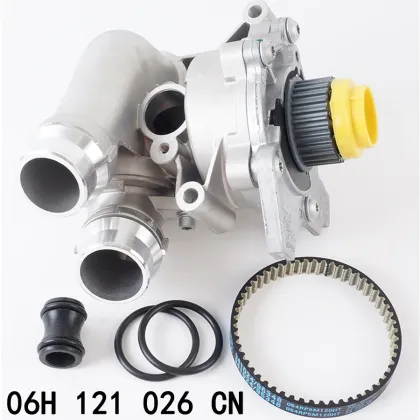
Every Audi engine has a main water pump that circulates coolant through the engine, radiator and heater core. On older engines such as the 3.0 L V6 in the 2002–2006 A4 and A6, it is driven by the timing belt. On the 2.0 L TFSI four-cylinder of roughly 2009–2017, the pump and thermostat share one housing, driven by a small toothed belt from the balance shaft.
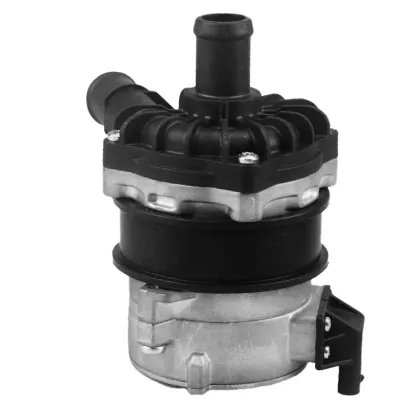
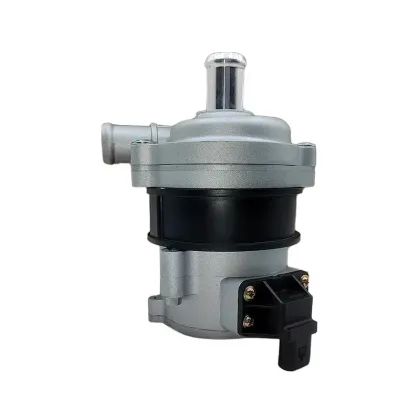
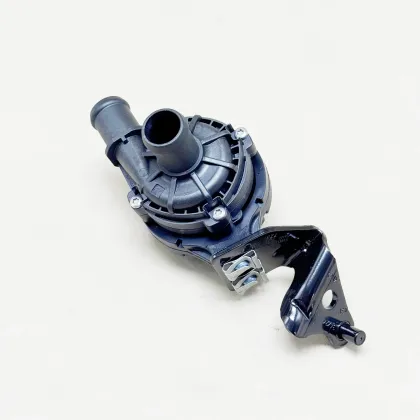
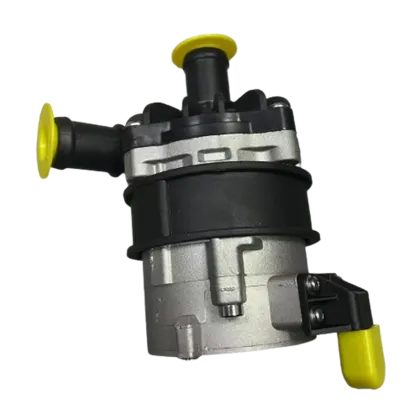
Many Audis also carry one or more small electric pumps, usually called auxiliary or additional coolant pumps. The engine computer switches them on when needed. Depending on the engine, they move coolant through a separate low-temperature circuit, support heater flow, or keep coolant moving through the turbocharger after you switch the engine off. On the supercharged 3.0 L TFSI V6 (S4, S5, A6, A7, A8, Q5, SQ5 and Q7), an electric pump runs the circuit that cools the charge air inside the supercharger housing, and dealer catalogs describe pumps such as 8K0 965 569 and 4H0 965 569 A as auxiliary pumps for supercharger cooling.
The two kinds fail differently. A main pump usually leaks or wears its bearing. An electric pump has a motor and electronics that can stop working without warning, often with a fault code but no leak.
Symptoms of a failing pump
- The temperature gauge climbs, or a coolant temperature warning appears, especially in traffic or on hills (more typical of the main pump).
- Coolant loss, a sweet coolant smell, or crusty residue around the pump, its hoses or the thermostat housing.
- A whine, grinding or rattle that changes with engine speed on a belt-driven pump.
- A stored fault for a coolant pump circuit, sometimes with no check engine light.
- On the supercharged V6, reduced power after hard driving or on a hot day, because the charge air runs hot when its circuit stops flowing.
- No hum or buzz from an electric pump when the system should be running it, or a pump that is louder than before.
If the engine overheats, stop as soon as it is safe and switch off. Continued driving can warp the cylinder head or damage the head gasket.
Fault codes and how to diagnose it
Generic codes for electric coolant pumps include P2600 to P2603 (coolant pump A), P261A to P261D (coolant pump B) and P023A (charge air cooler coolant pump control circuit). Which pump a code refers to differs by engine, so read the full description with an Audi-capable scan tool rather than relying on the code number alone. On some 2.0 L TFSI cars, P261A for the after-run pump is stored without a check engine light.
- Let the engine cool completely before you open anything. The cooling system is pressurized and hot coolant can scald.
- Check the coolant level and look for residue or drips at the pumps, hoses, thermostat housing and radiator.
- Read the fault memory of the engine control unit and note the exact pump named in the fault text.
- Use the scan tool’s output test to command the electric pump on. Listen and feel for it running.
- If it does not run, check its fuse, the connector, and power, ground and the control signal at the pump before you condemn it. Corroded connectors and broken wires produce the same codes as a dead pump.
- Pressure-test the cooling system to find leaks that are not visible, and do not overlook the thermostat, the coolant temperature sensor and the radiator fan, which can all cause overheating.
If your car is a 2013–2017 A5 or Q5, a 2013–2016 A4 or allroad, or a 2012–2015 A6 with the 2.0 L turbo, check your VIN for open recalls first. Audi recalled the electric coolant pump on those cars (NHTSA campaigns 17V-002 and 18V-229) because debris could block it and make it overheat.
Matching the part: OEM number and VIN
Audi uses different pumps by engine, model year and position, and part numbers are revised over time. Compare the number on your old pump with the listing, and verify it against your VIN before you order.
- 8K0965567 (also listed as 8K0965569, 8K0 965 567) is an electric auxiliary pump listed for the 3.0 L V6 in the 2010–2016 S4, 2010–2017 S5, 2012–2018 A6, 2012–2015 A7 (gas and TDI), 2013–2018 A8 and 2011–2015 Q7.
- 4H0965569A is a later auxiliary pump listed for the 3.0 L V6 in the 2016–2018 A7, 2015–2018 A8 and 2017–2019 Q7.
- 8K0965569A is listed for the 3.0 L V6 2013–2017 Q5 and 2014–2017 SQ5 and for the 4.0 L V8 2014–2018 RS7.
- 5Q0121599AA is a small auxiliary pump listed for the 2.0 L four-cylinder 2016–2023 TT and TTS and 2019–2024 Q3.
- 06H121026ED is a main water pump with thermostat housing listed for 2.0 L four-cylinder A3, A4, A5, A6, allroad, Q3, Q5 and TT models from 2009 to 2018.
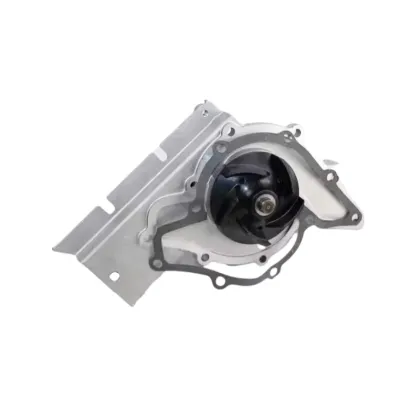
- 06C121004H is the main, timing-belt-driven pump for the 3.0 L V6 (engine codes BBJ and ASN) in the 2002–2006 A4 and 2002–2004 A6.
Browse all water pumps or the Audi catalog. Each product page has a fitment table with models, years and engines. For BMW, see the BMW water pump guide.
Replacement overview, difficulty and safety
An electric auxiliary pump is usually the easier job: two hoses, a connector and a mounting bracket, plus refilling and bleeding. A main pump is harder. On the old 3.0 L V6 it is replaced with the timing belt, which means locking both camshafts with special tools. On the 2.0 L TFSI the pump sits at the back of the engine, and its drive pulley bolt on the balance shaft is left-hand thread.
- Work on a cold engine and never open the expansion tank cap on a hot system.
- Disconnect the battery before you unplug an electric pump.
- Catch the coolant in a clean pan. It is toxic and attractive to animals, so dispose of it at a recycling point.
- Fit new seals and O-rings, and refill with the coolant type Audi specifies for your car, mixed to the correct ratio.
- Bleed the system as the service information directs. Audi often calls for vacuum filling, and the supercharger cooling circuit on the 3.0 L V6 has its own bleed points. Trapped air causes overheating and can make an electric pump run dry.
- Clear the fault memory, run the engine to temperature, check for leaks and re-check the level when cold.
Genuine versus aftermarket
The pumps in our catalog are aftermarket replacements listed against the Audi OEM numbers shown, not genuine Audi parts. Genuine and original-supplier pumps generally have the most consistent record. An aftermarket pump can make sense on an older, higher-mileage car if the number matches exactly, the connector is the same, and the system is filled and bled correctly. Ask us to confirm fitment for your VIN before you order.