A/C Compressor Failure: Warm Air, Clutch Not Engaging, Noise and Leaks
What the A/C compressor does
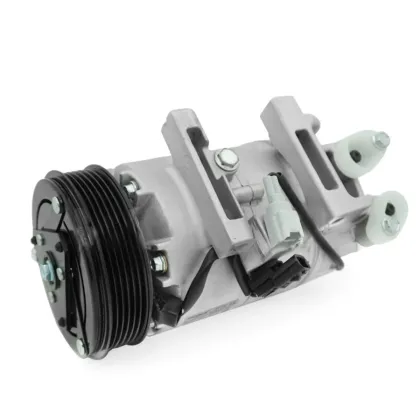
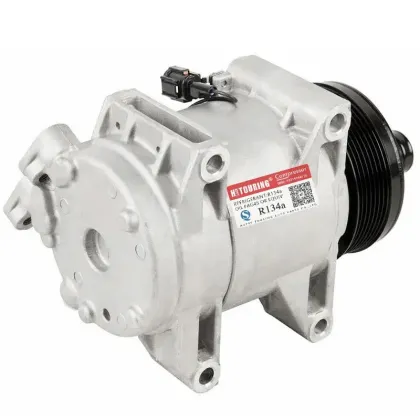
The compressor is the pump of the air conditioning system. It draws in low-pressure refrigerant vapor coming from the evaporator behind the dashboard, compresses it into a hot, high-pressure gas and pushes it to the condenser at the front of the car, where the heat is released. The refrigerant then passes through an expansion valve or orifice tube, cools sharply and returns to the evaporator to absorb heat from the cabin air. The refrigerant also carries the oil that lubricates the compressor.
On gasoline and diesel cars the compressor is driven by the engine’s accessory belt. Two designs are common. Some compressors have an electromagnetic clutch on the pulley that the car switches on and off. Many newer compressors, common on European cars, are clutchless: the pulley always turns, and an electronic control valve in the compressor varies its output from almost nothing to full. Many hybrids, such as the Lexus ES 300h, use an electric compressor instead. Knowing which type you have matters for diagnosis.
Symptoms of a failing compressor
- Warm or only slightly cool air from the vents, even with the system set to maximum cold.
- On compressors with a clutch: the clutch plate on the front of the pulley does not pull in and spin when the A/C is on, or it engages and drops out repeatedly.
- Grinding, rattling, knocking or a loud whine from the compressor area that appears or changes when the A/C is switched on.
- A squealing belt, or a belt that is thrown or shredded, which can happen when a compressor seizes.
- Oily, dirt-caked residue on the compressor body, its shaft seal or the line fittings, a sign of a refrigerant leak, since the refrigerant carries oil with it.
- Cooling that works on a cool morning but fades on a hot afternoon or in traffic.
Several of these also come from other faults. A low refrigerant charge, a cooling fan that does not run, a blocked condenser, a blend door that is stuck on heat or a faulty pressure sensor can all leave you with warm air while the compressor itself is fine.
How to diagnose it
- Keep clear of the belt and the cooling fan while the engine runs. The fan can also start with the ignition off. Wear eye protection near any A/C fitting: liquid refrigerant can cause frostbite and eye injury.
- Confirm the basics: the cabin blower works, the A/C button or setting is on, fuses are intact and the temperature setting actually changes the air.
- With the engine running and A/C on, check that the radiator and condenser fan runs and that the condenser is not packed with debris. Warm A/C at idle that improves when driving often points to a fan problem; see our BMW electric cooling fan guide.
- On a compressor with a clutch, watch whether the clutch engages. If it does not, the most common reason is a low charge: a pressure switch or sensor blocks engagement to protect the compressor. Other causes are a blown fuse, a failed relay, a worn clutch with too large an air gap or an open clutch coil.
- Read the fault memory with a scan tool that can reach the climate control module. Codes for the refrigerant pressure sensor or the compressor control valve are common on cars with clutchless compressors.
- Measure system pressures with A/C gauges suited to your refrigerant. A compressor that cannot build high-side pressure or pull low-side pressure down, with the correct charge, is worn internally. If you do not have the equipment, this is the step to leave to an A/C shop.
Refrigerant rules in the US
Federal law prohibits venting refrigerant to the atmosphere when servicing a vehicle A/C system. Refrigerant has to be removed with EPA-certified recovery equipment, and anyone who services motor vehicle A/C for any kind of payment must be trained and certified under EPA Section 609. In practice, have a certified technician recover the refrigerant before you disconnect any line, and have the system evacuated and recharged afterward.
Check the label under the hood for the refrigerant type and charge amount. Older cars use R-134a; many newer cars use R-1234yf, which needs its own equipment and is mildly flammable. Do not mix refrigerants or top up with sealant products, which can damage recovery machines and new components.
Matching the compressor: OEM number and VIN
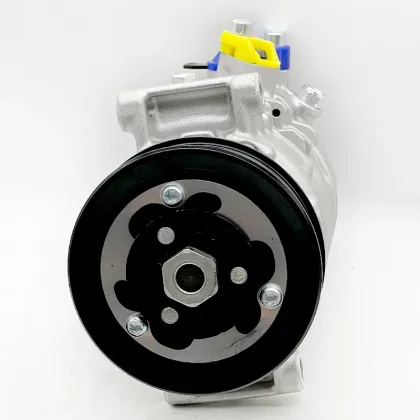
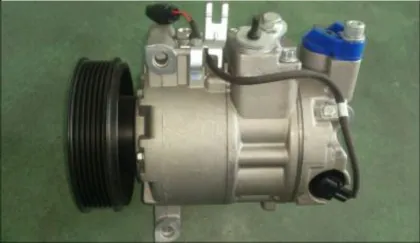
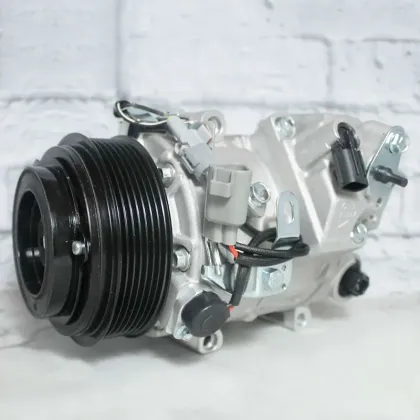
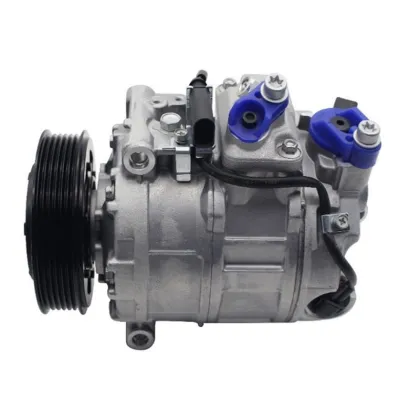
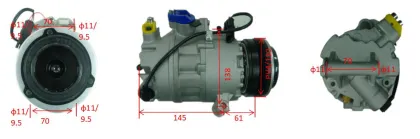
Compressors differ in mounting, pulley, clutch or control valve, connector and oil type even on the same model. Read the number on the label of your old compressor and confirm it by VIN before ordering. The compressors we carry:
- Audi: 4F0260805AF (4F0 260 805 AF) for the 2005–2011 A6 and A6 Quattro with the 3.0 L or 3.2 L V6; 7L6820808 for the 2011–2015 Q7 TDI; 5Q0820803Q for the 2020–2021 Q3 2.0 L.
- BMW: 64509121759 (64 50 9 121 759) for the 2007–2010 X5 3.0si and xDrive30i (E70).
- Lexus: 8832006190 (88320-06190) for the 2013–2018 ES 350 with the 3.5 L V6. The ES 300h hybrid normally uses an electric compressor.
- INFINITI: 926001LA0A (92600-1LA0A) for the 2011–2012 QX56 5.6 L V8; 926003JV0A for the 2014–2016 QX60 Hybrid.
Browse all A/C compressors and compressor control valves, or start from Audi, BMW, Lexus or INFINITI.
Replacement overview and difficulty
Difficulty: advanced, and partly a shop job because of the refrigerant rules. The mechanical swap is usually a matter of removing the belt, the lines and a few mounting bolts, though on some engines access from below is tight. What decides whether the new compressor lasts is the work around it:
- If the old compressor failed internally, metal debris may have spread through the system. Lines and some components can be flushed; many modern condensers cannot be flushed effectively and are replaced instead.
- Replace the receiver-drier or desiccant bag and the expansion valve or orifice tube, since they trap debris and moisture. Compressor makers commonly require this for their warranty.
- Fit new O-rings at every opened fitting, lubricated with the correct oil.
- Use the oil type the car maker specifies, and adjust the amount in the new compressor according to its instructions. Hybrid electric compressors need a special insulating oil; the wrong oil can damage them.
- Have the system pulled into a deep vacuum to remove moisture and check for leaks, then charged by weight to the amount on the under-hood label.
Skipping these steps is a common reason a new compressor fails early. Our compressors are aftermarket replacements listed against the OEM numbers shown, not genuine parts.