Bad Mass Air Flow (MAF) Sensor: Symptoms, Fault Codes, Cleaning vs Replacing
What the mass air flow sensor does
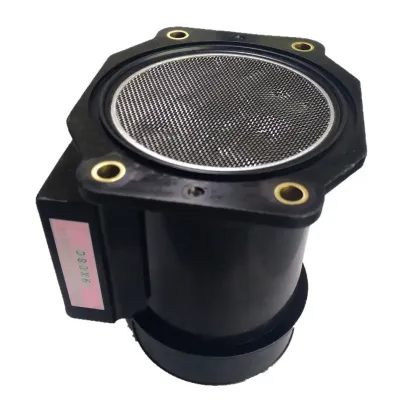
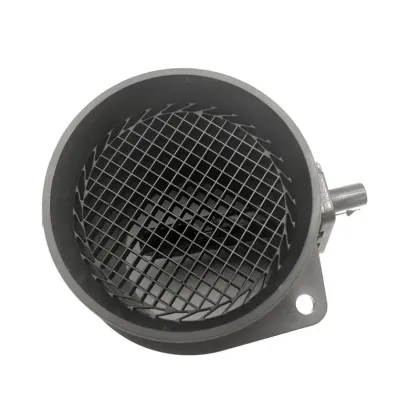
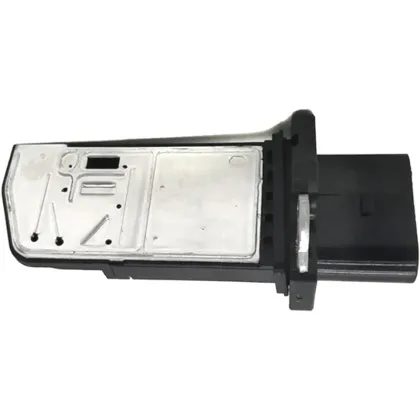
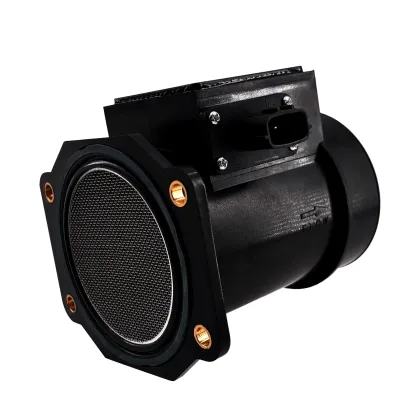
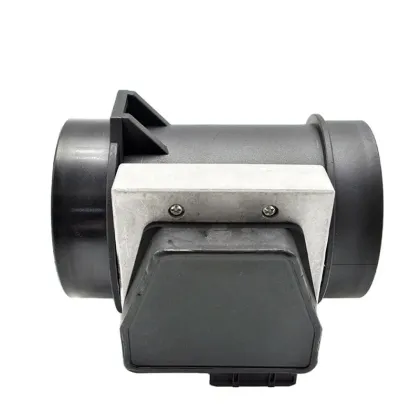
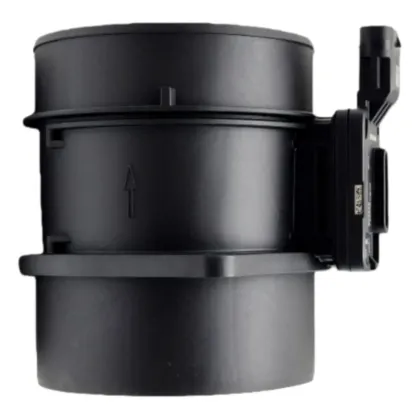
The mass air flow (MAF) sensor sits in the intake duct between the air filter box and the throttle body. A heated wire or thin heated film inside it is cooled by the air passing over it, and the sensor turns that cooling effect into a signal the engine computer reads as the mass of air entering the engine. The computer uses that number as a main input for how much fuel to inject, and on many turbocharged and diesel engines also for boost and exhaust gas recirculation.
Because the fuel calculation starts from this reading, a sensor that reads wrong makes the whole mixture wrong. A sensor that under-reads airflow makes the engine run lean; one that over-reads makes it run rich. The engine computer can correct small errors with its fuel trims, which is why a drifting sensor often causes vague drivability problems long before it sets a code. The element is easily coated by dust, oil mist and dirt that gets past the air filter, and electrical faults in the sensor or its connector can also cut the signal.
Symptoms of a bad or dirty MAF sensor
- Check Engine light, often with one of the MAF circuit codes or a lean code (see below).
- Rough or unstable idle, and in some cases stalling when you come to a stop or just after a start.
- Hesitation, stumbling or a flat spot when you accelerate, and weaker power than usual.
- Hard starting, or an engine that starts and then dies.
- Worse fuel economy, a rich fuel smell or black smoke from a diesel.
- On turbo and diesel engines, reduced power or a limp mode, because boost and EGR control also depend on airflow.
None of these symptoms is unique to the MAF. A vacuum or intake leak, a dirty throttle body, a weak fuel pump, worn spark plugs or a failing oxygen sensor can all look similar. Diagnose before you buy.
Fault codes: P0100–P0104 and P0171/P0174
Generic OBD-II codes that point at the MAF circuit itself:
- P0100: Mass or volume air flow circuit malfunction.
- P0101: Mass or volume air flow circuit range/performance problem. The signal is electrically present but does not match what the engine computer expects for the engine speed and load.
- P0102: Mass or volume air flow circuit low input.
- P0103: Mass or volume air flow circuit high input.
- P0104: Mass or volume air flow circuit intermittent.
Codes P0171 (system too lean, bank 1) and P0174 (system too lean, bank 2) are related but less direct. They mean the engine computer has had to add more fuel than it should. A contaminated MAF that under-reads airflow is one possible cause; unmetered air entering after the sensor through a cracked intake boot, a loose clamp or a vacuum leak is a very common one, and low fuel pressure is another. Lean codes on both banks of a V6 or V8 at the same time point to something both banks share, such as the MAF, fuel pressure or a large intake leak. Many European cars also store manufacturer-specific codes, so read the fault memory with a scan tool that can talk to your make’s engine computer.
How to diagnose it
- Switch the ignition off before you unplug any connector. Let a hot engine cool before you reach around the intake.
- Read all stored codes and freeze-frame data, and note them before you clear anything.
- Inspect the intake path from the air filter to the throttle body. Look for cracked rubber boots, loose clamps, a missing or badly fitted filter, and oil in the duct. Air that enters after the MAF is never measured.
- Check the connector and wiring at the sensor for corrosion, bent pins or a loose fit.
- Watch live data. Compare the MAF reading at idle and at a steady higher engine speed with the value your service information gives, and look at short- and long-term fuel trims. Trims that are strongly positive at idle and improve at higher speed often point to a vacuum leak; trims that stay off across the range fit a MAF or fuel pressure problem.
- As a test on some cars, unplugging the MAF with the engine idling makes the computer switch to a fallback value. If the engine suddenly runs better, the sensor is suspect. Clear the codes this creates afterward.
- If you have access to another known-good sensor of the same number, swapping it in is one of the clearest tests.
Cleaning vs replacing
If the sensor reads a little off and looks dirty, cleaning is a reasonable first step. Remove the sensor, spray the element with a cleaner made specifically for MAF sensors, and let it dry completely before you refit it. Never touch the wire or film with a finger, swab, brush or compressed air: the element is fragile and easily broken or knocked out of calibration. Do not use carburetor or brake cleaner, which can leave residue or damage the plastic.
Cleaning helps with light contamination only. It does not fix a cracked housing, a broken element, a failed internal circuit or a corroded connector. If the codes and fuel trims come back after a clean, replace the sensor. Also look for the cause of the dirt: an oiled cotton air filter that was over-oiled, a filter that does not seal in its box, or oil from the crankcase ventilation system can coat a new sensor too.
Matching the part by OEM number and VIN
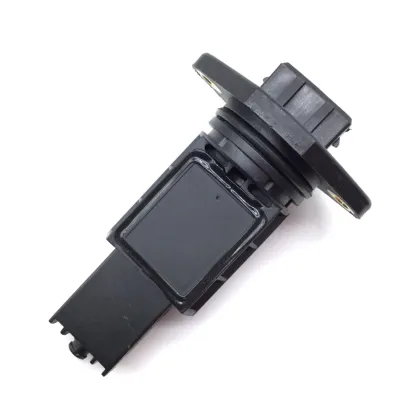
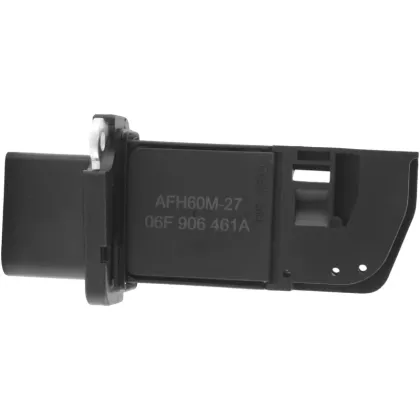
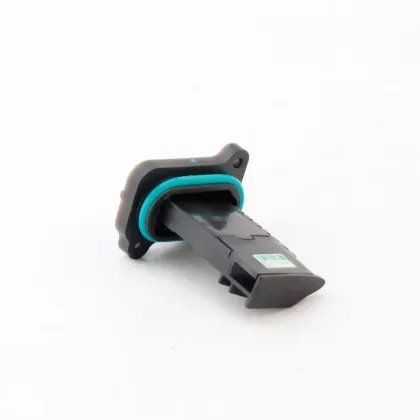
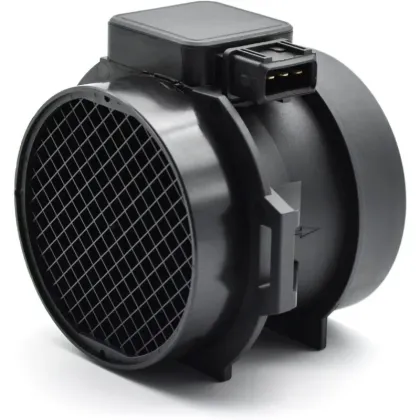
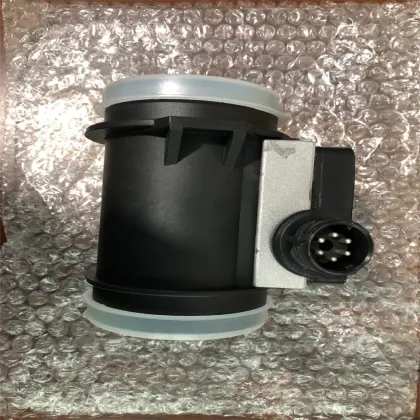
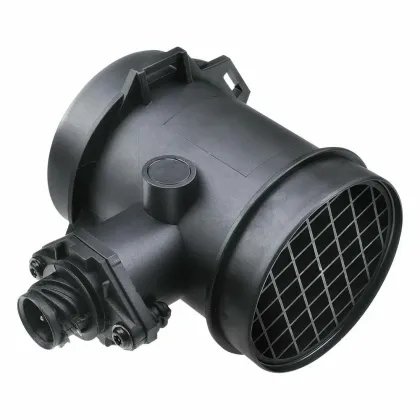
MAF sensors look alike across many cars but differ in calibration, connector, housing diameter and whether the part is a complete sensor with tube or a plug-in insert. Read the number on your old sensor and confirm it by VIN in a parts catalog before you order. The sensors we carry include:
- BMW: 13621432356 (13 62 1 432 356) for E46 3 Series, E39 525i/528i and Z3 six-cylinders; 13627602038 for N20/N26 four-cylinder models such as the F30 328i and also several M models; 13627513956 for the 2004–2006 X3 2.5i and 3.0i; 13627548103 for the 2007–2010 X5 4.8i; 13621702078 for 1990s V8 models; 13621730074 for the E34 525i.
- Audi: 06J906461D for 2.0 L A3, A4, A5, A6, Q3, Q5 and others; 06J906461B and 06F906461A for earlier 2.0 L A3, A4 and TT models; 034133471K for the early-1990s 2.2 L five-cylinder.
- Volvo: 31430000 for 2016–2025 2.0 L four-cylinder models; 31342362 for 1999–2009 five-cylinder cars; 8670113 for the 1999–2001 S80 T6; 1275749 is a sensor insert for the 850 and 1998 C70, S70 and V70.
- INFINITI: 2268031U00 (22680-31U00) for the I30, J30 and earlier Q45; 2268031U05 for the 1999–2001 Q45; 226804W001 for the 2001–2003 QX4.
- Mercedes-Benz: 6549053500 for the 2021–2025 Sprinter 2.0 L diesel; 1110940148 for the 2001–2004 SLK230 Kompressor.
Browse all mass air flow sensors, or start from BMW, Audi, Volvo, INFINITI or Mercedes-Benz. Each product page lists the models, years and engines it is listed for.
Replacement overview and difficulty
Difficulty: easy on most cars. The sensor is usually held by hose clamps or a few screws in the intake duct and has one electrical connector. Switch the ignition off, unplug the connector, release the clamps or screws, and fit the new sensor in the same orientation, following the airflow arrow on the housing. Make sure every clamp and boot seals fully, since a leak after the sensor recreates the problem. On a few engines the sensor is part of the air filter housing or harder to reach, so check the procedure for your car.
After fitting, clear the codes, then drive normally. Fuel trims adapt over time, and some cars allow the adaptations to be reset with a scan tool. Our sensors are aftermarket replacements listed against the OEM numbers shown, not genuine parts, so matching the number is the main safeguard.