Blower Motor Not Working on a BMW or Mercedes-Benz: Motor or Regulator, Diagnosis and Replacement
Blower motor versus speed control
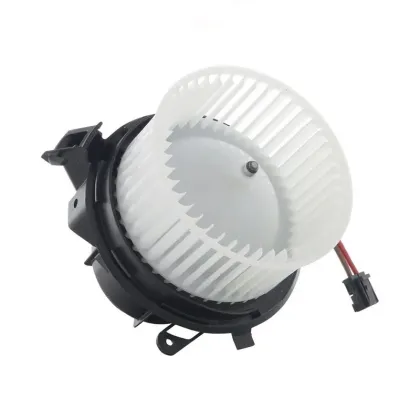
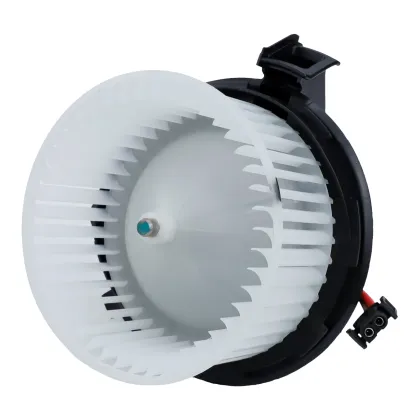
The blower motor is the fan that pushes air through the heater core and the A/C evaporator and out of the vents. It is a simple electric motor with a fan wheel, and it runs whenever the heat, A/C, defrost or ventilation is on. Its speed is set by a separate part, and that part fails at least as often as the motor. Knowing which one you have saves money:
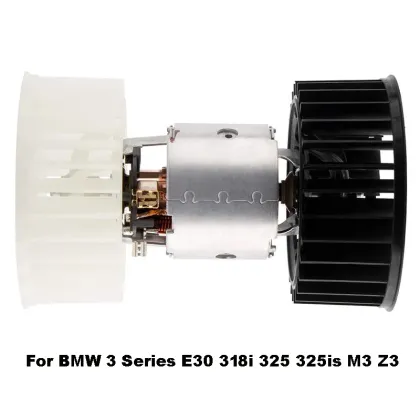
- Older systems such as the E30 3 Series use a blower resistor. Lower speeds run through resistor coils, and the top speed bypasses them. A burnt resistor typically leaves only the top speed working.
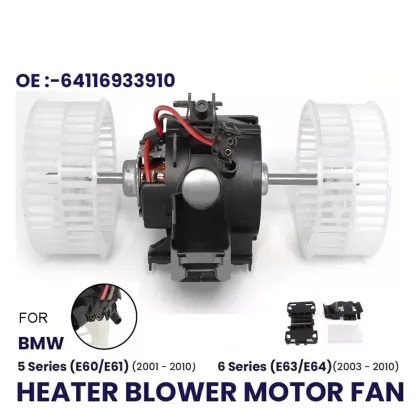
- The E60 and E61 5 Series use an electronic final stage unit, often called the blower regulator. When it fails, the fan can ignore the controls, change speed on its own, keep running with the car off or stop altogether.
- Mercedes-Benz models such as the W204 C-Class and W212 E-Class use a separate electronic blower motor regulator next to the motor. Owners report that the setup changed during W204 production, so check by VIN which part your car has.
The parts in this guide are blower motors. A worn motor draws more current as it ages, and that extra load is a common reason resistors and regulators burn out. If the regulator has failed, check the motor too, or the new regulator may fail soon.
Symptoms and what they usually point to
- No air from the vents at any setting: the motor, its fuse, the regulator or the wiring.
- Air only on the highest speed: on resistor-type systems, almost always the resistor.
- Fan speed that changes on its own, does not respond to the controls or keeps running after the car is locked: usually the final stage or regulator.
- Whining, squealing or grinding that changes with fan speed: worn motor bearings.
- Ticking, rattling or flapping: leaves or debris in the fan wheel.
- Weak airflow at every speed: a clogged cabin filter, debris or a slow, worn motor.
- A fan that starts working again after a bump or a tap on the housing: a motor with worn brushes or a dead spot, or a loose connector.
- A melted or discolored connector: high current from a failing motor.
How to diagnose it
- Check the blower fuse and the cabin filter first. A blocked filter can cut airflow badly on its own.
- Listen at the blower with the fan on. Noise that changes with fan speed points to the motor or to debris in the wheel.
- Read the climate control fault memory with a scan tool that supports BMW or Mercedes-Benz. Regulator and motor faults are often logged there.
- Unplug the motor and check for power and ground at its connector with the fan switched on. On resistor systems, check that voltage changes between speeds.
- To test the motor alone, power it directly from a fused 12-volt supply. A motor that does not run, runs slowly or draws high current is worn out.
- If the motor runs well on direct power but not in the car, the resistor, final stage, regulator or wiring is at fault.
- Inspect every connector for melted plastic or burnt pins, and replace damaged connectors as well as the failed part.
Matching the part: OEM number and VIN
Blower motors differ by model, climate system and build date. Read the number on your old motor and check it against your VIN in a BMW or Mercedes-Benz parts catalog before you order. The numbers we list:
- 2048200208 (A 204 820 02 08) is the blower motor listed for the 2008–2011 C300, C350 and C63 AMG (W204), the 2010–2011 E350, E550 and E63 AMG (W212) and the 2010–2012 GLK350.
- 2128200708 (A 212 820 07 08) is the blower motor listed for the 2011–2015 W204 C-Class, the 2010–2017 W212 E-Class, the CLS of 2012–2018, the GLK of 2011–2015, the SL of 2013–2020 and the 2016–2021 AMG GT family. It overlaps with 2048200208 on some 2010–2011 cars, so check by VIN.
- 64116933910 (64 11 6 933 910) is the blower motor listed for the 2004–2010 BMW 5 Series sedan and wagon (E60, E61), from the 525i to the 535i xDrive.
- 64111370930 is the blower unit listed for the E30 3 Series of 1984–1992, including the M3, and the 1996–2000 Z3 and Z3 M. Fitment can depend on the heater version, so compare your old part.
See all blower motors, or the BMW and Mercedes-Benz catalogs. Each product page has a fitment table.
Replacement overview and difficulty
Difficulty: easy to intermediate, depending on the car. On the E60 and on the W204 C-Class, the motor sits under the dash on the passenger side behind a footwell cover. It is held by screws or a twist lock, and owners describe the job as cramped rather than hard. On the E30, the blower is in the engine bay against the firewall, under the cowl cover.
- Disconnect the battery before you unplug the motor or the regulator.
- Note how the motor and any locking tab or bracket sit before you remove it. Plastic tabs become brittle and break easily.
- Clear leaves and debris from the housing and air intake, and fit a new cabin filter while you are there.
- Do not drop screws into the blower housing. They will rattle against the fan wheel.
- If the regulator, final stage or resistor has failed and the motor is old, consider replacing both, since a worn motor can kill a new regulator.
- Test every fan speed and the automatic mode before you refit the trim.
Repair or replace?
Blower motors are not worth rebuilding for most owners; the brushes and bearings wear together, and a complete motor is the normal repair. Cleaning out debris can quiet a noisy fan if the bearings are still good. The motors we list are aftermarket replacements matched to the OEM numbers shown, not genuine BMW or Mercedes-Benz parts. We do not state warranty or stock terms on this page; ask us to confirm them for a listing before you order.