Volvo Throttle Body (Electronic Throttle Module) Problems: Reduced Engine Performance and Limp Mode
What the electronic throttle module does
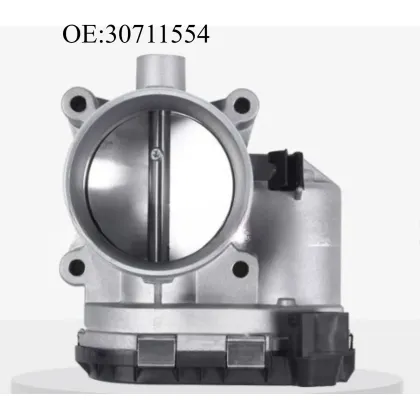
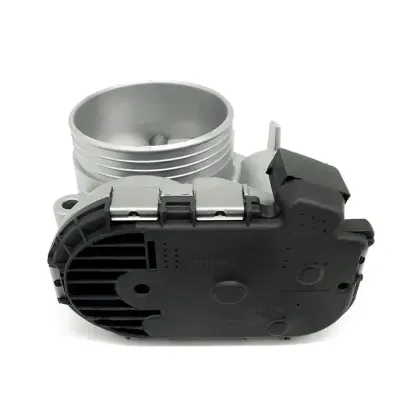
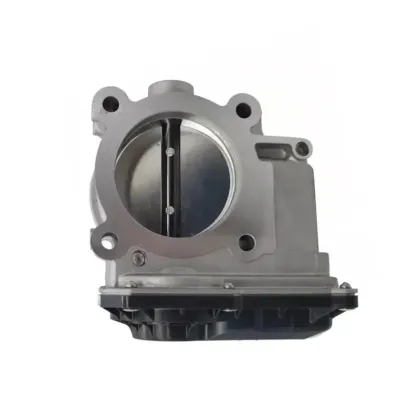
Volvo calls the electronic throttle body the electronic throttle module, or ETM. There is no cable from the gas pedal. The pedal position is read by sensors, the engine control module (ECM) decides how far the throttle should open, and a motor in the ETM moves the throttle plate. Position sensors in the ETM report the plate angle back to the ECM.
If the reported position does not match the commanded one, or the sensors disagree, the ECM limits power to protect you and the engine. That is the limp mode many owners meet, often with a warning in the instrument cluster.
Symptoms of a failing throttle module
- A message such as "Reduced engine performance" or an engine service message, often with the check engine light.
- Limp mode: very little response to the pedal, sometimes with speed held low.
- A rough, hunting idle, for example rpm rising and falling at a stop.
- Stalling when you stop, or sudden loss of power and surging while driving.
- Hesitation or flat spots when you press the accelerator, mostly at low speed.
Vacuum and intake leaks, a dirty mass air flow sensor and ignition faults can produce similar symptoms, so confirm the cause before you replace the module.
Fault codes and how to diagnose
Volvo stores its own engine codes (shown as ECM followed by a number in Volvo software) as well as generic OBD-II codes. Generic codes linked to the throttle include P2101 (throttle actuator control motor circuit range/performance), P2111 and P2112 (throttle actuator control system stuck open or stuck closed), P0121 and P0221 (throttle/pedal position sensor A or B range/performance), P0122 and P0123 (sensor A circuit low or high), P2135 (sensor A/B voltage correlation) and P0507 (idle rpm higher than expected). Then:
- Safety first. Switch the ignition off before you touch the module, keep fingers away from the plate, and let a hot engine cool.
- Remove the intake hose and look at the plate and bore. Heavy carbon can stop the plate from closing properly and confuse the idle control.
- Check for intake and vacuum leaks: split hoses, the PCV system and the intake ducts. On the 2.0 L four-cylinder engines, a torn check valve where the PCV hose meets the intake, or in the intake pipe on some versions, can cause a vacuum leak and an idle code such as P0507 by itself.
- Check the ETM connector and wiring for corrosion, damaged pins and chafing.
- With a Volvo-capable scan tool, compare the commanded and actual throttle angle and the two position sensor signals. A delay, gap or jump points to worn sensor tracks or a weak motor inside the module.
- Clean the module if it is dirty and run the adaptation. If throttle codes return, replace the module.
Matching the module: OEM number and VIN
Volvo used different throttle modules for different engines and years, and they look alike. Read the number on your old module and confirm the OEM number against your VIN in a Volvo parts catalog before ordering.
- 30711554 is the module for P2-platform cars of the 2000s: the C70 (2002–2004), S60 (2002–2009), S80 (2002–2006), V70 (2002–2007) and XC90 (2003–2006), with 2.3, 2.4 and 2.5 L five-cylinder and 2.9 L six-cylinder engines. It is cross-referenced to Bosch 0280750131. 2002 models were a changeover year, so check which module your car has.
- 30711552 is listed for the 2.5 L five-cylinder turbo (T5) in the C30 (2008–2013), C70 (2006–2013), S40 and V50 (2005–2011), and S60 (2012–2016, including the 2016 S60 Cross Country).
- 31293736 is listed for the 2.0 L four-cylinder in 2015–2025 models: the S60, S60 Cross Country, S80, V60, V90, V90 Cross Country, XC40, XC60, XC70 and XC90, including T5, T6, T8 and B5/B6 versions.
Browse all Volvo throttle bodies and the Volvo catalog. Each product page lists fitment by model, year and engine.
If you own a 1999–2002 Volvo with the earlier throttle module, a Volvo dealer can tell you by VIN whether the 2006 recall for throttle module software applies to your car. That recall did not cover cars with the newer module.
Cleaning, replacement and adaptation
Difficulty: beginner to intermediate. The module sits at the end of the intake tract and is held by a few bolts and one connector. On some models, intake ducts or covers have to come off first.
- Let the engine cool. Switch the ignition off and disconnect the battery before unplugging the module.
- Remove the intake hose. To clean, use a throttle body cleaner on a cloth, wipe the bore and plate, and do not soak or submerge the module or force the plate by hand. Volvo's own cleaning instructions warn against submerging the unit.
- Remove loose dirt before you open the plate, so it does not fall into the engine.
- If replacing, fit a new gasket or seal and check the intake hose for splits while it is off.
- Run the throttle adaptation. Volvo's service information calls for the electronic throttle unit to be adapted with Volvo diagnostic software after the module is replaced. Some owners use an ignition-on wait procedure instead, but a scan tool that supports Volvo adaptations is the reliable way.
- Clear the codes, let the engine idle, and take a test drive. Check for returning codes.
Clean or replace?
Carbon can be cleaned off, and a clean module with a correct adaptation often idles better. Wear inside the module cannot: the position sensors and motor are sealed in the housing. If you have stored codes for throttle position or the throttle motor after cleaning and checking for leaks, replacement is the fix. The modules listed here are aftermarket replacements for the OEM numbers shown, not genuine Volvo parts.