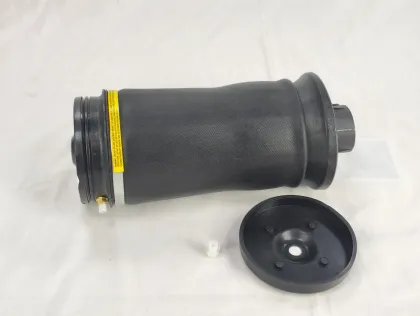
Mercedes-Benz Air Suspension (Airmatic) Problems: Compressor, Air Springs and Fixes
How Airmatic works
Mercedes-Benz sells air suspension under the Airmatic name, and the same idea appears on the E-Class, CLS, S-Class, GL, ML, GLE and some C-Class (W205) models, sometimes under names such as Air Body Control. Each wheel has an air spring, a rubber bellows that carries the weight in place of a steel coil. Air comes from an electric compressor and is routed through a valve block to each corner. Height sensors tell the control unit how the car sits, and it adds or releases air to hold the chosen ride height.
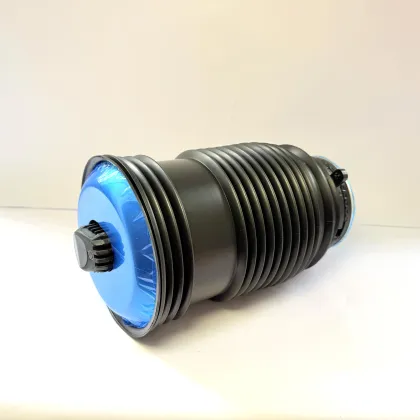
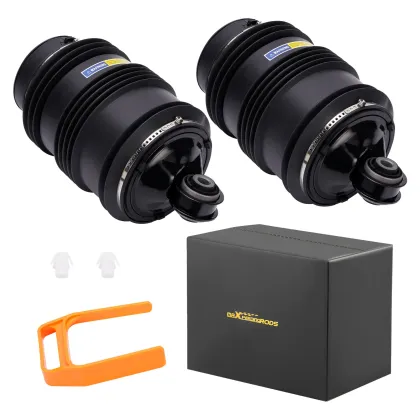
The air springs are often part of the strut, and the strut may have adjustable damping as well. Replacement parts are listed either as a complete strut, as an air spring only (sometimes called an air bellows or pneumatic spring), or as a compressor.
Symptoms of a problem
- The car sags at one or more corners after sitting overnight, and rises again once the compressor runs.
- A warning in the instrument cluster about vehicle level or the suspension system.
- The compressor runs for a long time, runs again and again, or is noisy.
- A rough, floaty or uneven ride, or the car leaning in turns.
- The car will not raise or lower to the chosen height.
- Audible hissing from near a wheel, or wet-looking cracks in the rubber.
The most common root cause is a leaking air spring, as old rubber cracks at its folds. The compressor then has to refill the system again and again, which shortens its life. A new compressor on a leaking system does not solve anything.
Diagnosis: find the leak before buying a compressor
- Check how the car sits when parked and how long it takes to sag. One corner dropping quickly points to that corner’s spring or line.
- Inspect each bellows, fittings and lines for cracks or rubbing. Spray soapy water over the suspect parts and look for bubbles.
- Read the fault memory with a Mercedes-capable scan tool. It can name the corner that is out of range or point to a sensor, valve or compressor fault.
- Check the compressor’s fuse and relay and listen to it. A compressor that runs but does not build pressure might have a leak, a failed dryer or a worn piston.
- Check height sensor linkages. A broken link can mimic a leak.
Matching parts: OEM number and VIN
Mercedes air suspension parts differ by chassis, axle, 4MATIC or rear-wheel drive and options like adaptive damping. Please verify the OEM number against your VIN with a Mercedes-Benz parts catalog before you order. A few listings in our catalog:
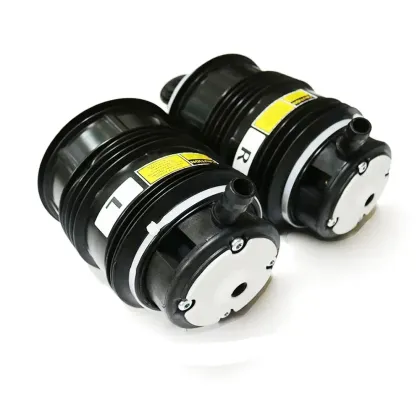
- 2113200825 and 2113200925 are air spring bellows listed as rear springs for the W211 E-Class built from about 2003 to 2009. Sellers describe 2113200925 as the two-pin version for cars without adaptive damping (ADS), so connector and equipment matter. Front and rear springs carry different numbers, so confirm which axle and side you need.
- 1663200625 is an air spring listed for GL and ML models. Confirm the axle and equipment against your VIN.
- 2053200225 is a rear right air spring for the W205 C-Class (listed for the C300, C400 and C350e) with air suspension. The rear left is a different number, and the front springs differ again.
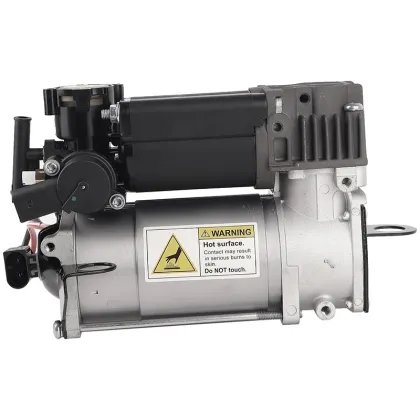
- 211320030480 is a compressor listed for the CLS and E-Class models of the W211/C219 era, offered as a remanufactured unit.
See all Mercedes-Benz air suspension listings and the Mercedes-Benz catalog. If a listing says “exchange” or “reman”, ask us how that applies to your order before you pay.
Replacement overview, difficulty and safety
Difficulty: intermediate. Replacing an air spring bellows is a manageable job on many models once the car is supported. Replacing a full strut is more involved, and compressor and valve block jobs need diagnostic tools to reset or test the system. Plan one to three hours per corner.
- Park on level ground and support the car on jack stands. Deflated air suspension can drop the body suddenly.
- Use the lift or jack mode if your model has one, so the car does not try to raise itself, or turn the ignition off as directed by the manual.
- Release air from the system as the procedure says before loosening fittings. Wear eye protection.
- Replace springs in pairs on the same axle where you can. Fit the new bellows without twists, pinches or dirt on the seals.
- If the old compressor ran constantly, replace or check the dryer and look for moisture in the lines.
- After installation, inflate the system, check with soapy water, lower the car and verify ride height. Some cars need a level calibration with diagnostic software.
OEM versus aftermarket: an honest view
Genuine Mercedes-Benz and original-equipment-supplier air springs usually last longest, at the highest price. The parts in our catalog are aftermarket replacements for the Mercedes OEM numbers shown; they are not genuine Mercedes-Benz parts. Aftermarket quality varies, and bellows and compressors are wear items in any brand. Some owners also consider converting to coil springs; that is a separate repair with its own consequences, so take advice before choosing it.