INFINITI Fuel Pump Failure: Symptoms, Diagnosis and Replacement (G35, FX, M, Q50, QX56, QX60, QX80)
What the in-tank fuel pump does
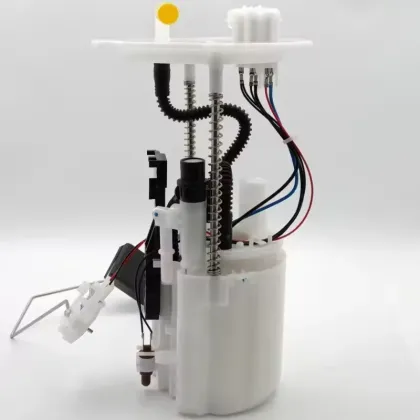
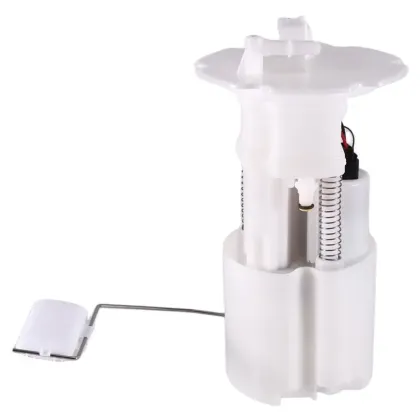
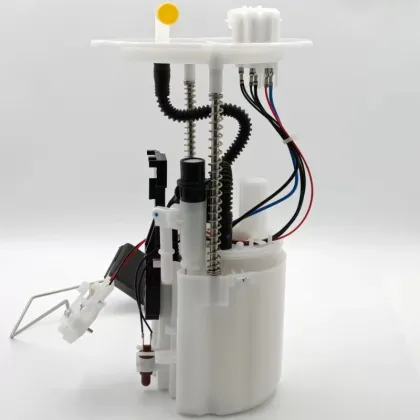
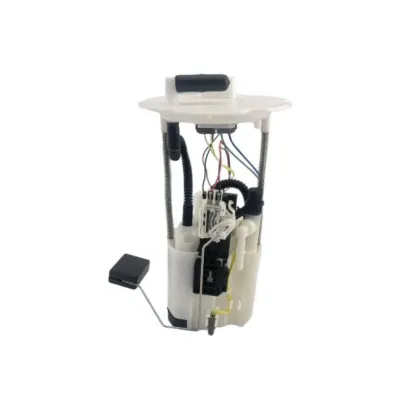
INFINITI lists the in-tank pump as "Pump Complete-Fuel", with part numbers that start with 17040. The assembly sits inside the fuel tank and holds the electric pump and a strainer, and on most models the main fuel level sender as well. It supplies the engine with fuel at the pressure it needs. On the twin-turbo 3.0 L in the Q50 and Q60, it also has to keep the engine-mounted high-pressure pump supplied.
Many rear- and all-wheel-drive INFINITIs, such as the G35 and FX, use a saddle-shaped tank. The pump assembly sits on one side and a secondary level sender on the other. A fuel gauge problem on these cars may come from either unit, not only from the pump assembly.
Signs the pump is failing
- The engine cranks for a long time before it starts, or cranks but does not start.
- Stalling or sputtering at highway speed, uphill, when towing or with a low fuel level.
- Hesitation and power loss under load, sometimes with a check engine light and lean codes.
- A whine from under the rear seat area that is louder than before, or no priming hum when the ignition is switched on.
- Hard starting when the engine is hot that improves once it cools.
- A fuel gauge that reads wrong or jumps, if the level sender in the assembly is worn.
The same symptoms can come from a blown fuse, a failed relay, a clogged strainer, a wiring fault or, on some models, the fuel pump control module. Test before you replace.
Check for recalls
Nissan has recalled INFINITI fuel pumps on some models. Recall 21V-373 replaced the fuel pump module on 2020–2021 QX80s with the V8, because the impeller could swell and bind and stall the engine. Recall 17V-476 reprogrammed the fuel pump control module on 2016–2018 Q50s and 2017 Q60s with the 2.0 L engine. Those vehicles fall outside the pumps listed here, but checking your VIN at nhtsa.gov/recalls takes a minute and an open recall is repaired free.
How to diagnose it
- Work safely. Fuel in the lines is under pressure even with the engine off. Keep sparks and flames away and relieve pressure by the factory procedure before disconnecting anything.
- Read the codes with a scan tool. Low fuel pressure often shows up as lean codes or misfires before a pump-specific code appears.
- Switch the ignition on and listen for the pump to run briefly. If it stays silent, check the fuel pump fuse, relay and the power and ground at the pump connector. Some models, such as the QX80, use a separate fuel pump control module, which INFINITI also calls a fuel pump driver module, so test it too.
- Measure fuel pressure against the specification in your repair information, at idle and under load. If your engine has no test port on the fuel rail, you will need a gauge adapter that fits inline at the fuel line connector.
- If you remove the pump, look at the strainer and the inside of the tank. Rust, debris or water means the tank needs cleaning, or the new pump can fail early.
Matching the pump: OEM number and VIN
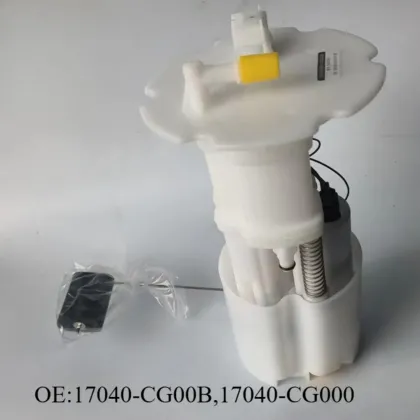
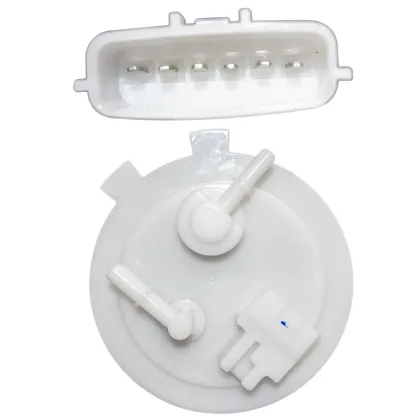
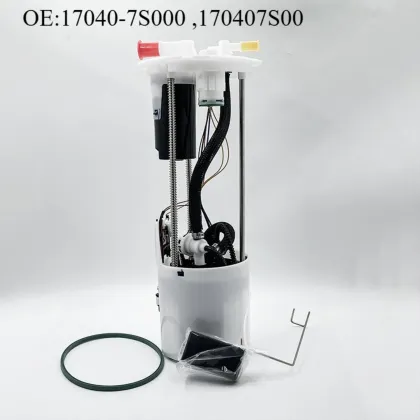
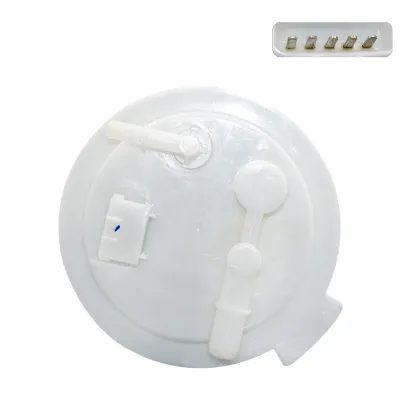
INFINITI uses different 17040 numbers by model, engine, drivetrain and production date, and some listings carry two or three numbers from the same pump family. Compare the number on your old assembly or check your VIN in an INFINITI parts catalog before ordering.
- 17040CD000 (17040-CD000): 2003–2005 G35 with the 3.5 L V6. Sedan and coupe applications differ by catalog, so confirm by VIN.
- 17040CG000 (17040-CG000): 2003–2007 FX35 and FX45.
- 170401CB0D and 170401CB0C: FX35 (2009–2012), FX37 (2013), FX50 (2009–2013) and QX70 (2014–2016).
- 170401MA0B and 170401NC0C: M35h (2012–2013), M37 (2011–2013), Q50 (2014–2016, 3.5 L and 3.7 L), Q70 (2014–2017) and Q70L (2015–2017).
- 170404HK1A (17040-4HK1A): Q50 (2016–2024) and Q60 (2017–2022) with the 3.0 L twin-turbo V6. It does not cover Q50s with other engines.
- 170403KA1E (also listed as 17040-3KA1C and 17040-3KA1A): JX35 (2013) and QX60 (2014–2017) with the 3.5 L V6, not the hybrid.
- 170407S000 (17040-7S000): QX56 (2004–2006) with the 5.6 L V8.
- 170403ZD0B (17040-3ZD0B): QX80 (2016–2019) with the 5.6 L V8.
The fitment table on each product page shows models, years and engines. You can also browse all INFINITI fuel pumps or the INFINITI catalog.
Replacement overview, difficulty and safety
Difficulty: intermediate. On many INFINITI cars, including the G35, the pump is reached through an access cover under the rear seat cushion, which avoids lowering the tank. Body-on-frame SUVs such as the QX56 and QX80 can be a bigger job, so check the procedure for your VIN before you start.
- Work outdoors or in a well-ventilated area, away from flames, sparks and heaters, with a fire extinguisher nearby.
- Relieve fuel pressure by the factory procedure and disconnect the battery.
- Run the tank low beforehand if you can, and clean around the access cover so dirt does not fall into the tank.
- Use a new seal or gasket, seat the lock ring fully and make sure the float arm moves freely.
- Switch the ignition on a few times to prime the system, check for leaks, then start the engine and clear any stored codes.
OEM versus aftermarket
The assemblies in our catalog are aftermarket replacements for the INFINITI numbers shown, not genuine INFINITI parts. For an older G35, FX or QX56 where the repair has to make economic sense, an aftermarket assembly can be a reasonable choice if you accept somewhat more uncertainty about long-term durability. An exact number match, a clean tank and a new seal matter most.