BMW Throttle Body Problems: Symptoms, Cleaning and Replacement
What the throttle body does
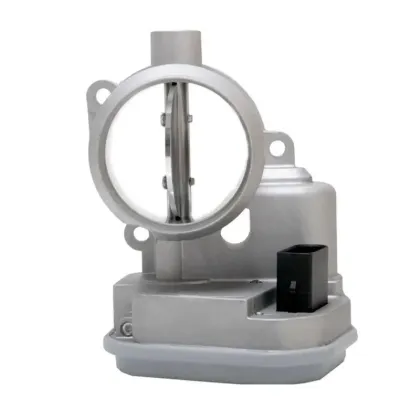
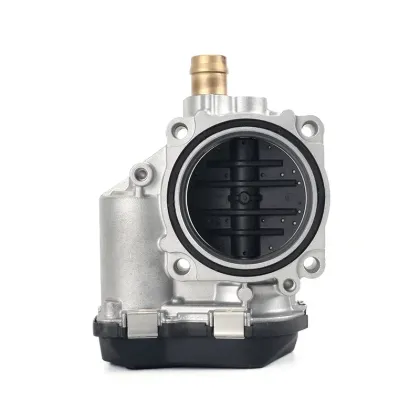
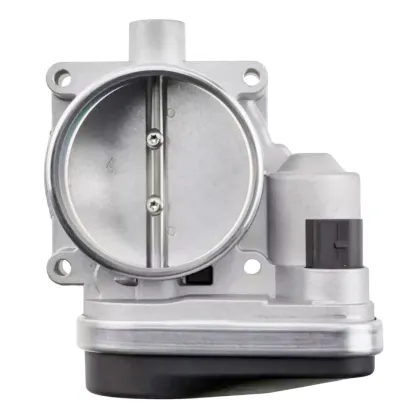
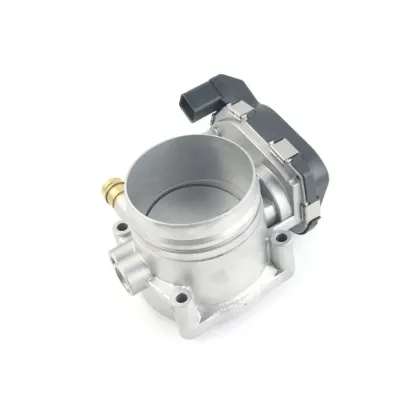
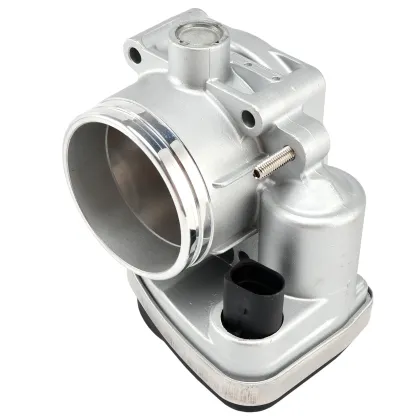
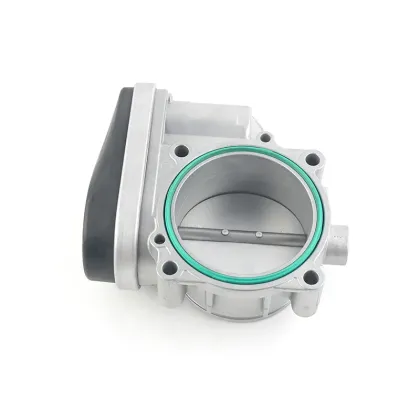
The throttle body is the valve at the start of the intake that controls how much air enters the engine. On modern BMWs it is electronic: there is no cable to the gas pedal. The pedal position is read by a sensor, the engine computer (DME) decides how far to open the throttle, and a small motor in the throttle body moves the plate. Position sensors inside report back so the computer can check that the plate is where it was told to be.
Some BMW engines with variable valve lift control airflow mostly with the valves instead, and the throttle body then has a smaller role. Even so, it is part of the system, and a fault there can put the car into limp mode.
Symptoms of a throttle body problem
- A rough, hunting or too-low idle, or an idle that changes by itself.
- Hesitation or a delay when you press the pedal, or surging at steady speeds.
- Stalling when you stop, or difficulty restarting after a stop.
- Reduced power and a warning light, sometimes with a message about the engine electronics. The car may drop into limp mode with the pedal barely responding.
- Fault codes related to the throttle actuator or position sensor.
Vacuum leaks, a dirty mass air flow sensor, worn ignition parts or a faulty pedal sensor can look similar, so confirm the cause.
How to diagnose it
Read the fault memory with a BMW-capable tool. Generic codes you may see include P2101 (throttle actuator control motor performance), P2111 and P2112 (throttle stuck open or closed), and P2135 (throttle or pedal position sensor correlation). BMW also stores its own codes for the throttle valve. Then:
- Inspect the intake. Remove the intake boot and look at the plate and bore. A ring of black carbon or oily residue can stop the plate from closing fully.
- Check live data with a scan tool. The commanded and actual throttle angles should follow each other closely. A gap suggests a sticking plate, a worn motor or a sensor fault.
- Check for vacuum leaks and unmetered air, such as a split intake boot, which can cause an irregular idle by itself.
- Check the connector and wiring for damage and corrosion.
- If the plate is just dirty, cleaning may be enough. If the motor or sensors are at fault, or the plate is cracked or the bore worn, replacement is the fix.
Choosing the right throttle body: OEM number and VIN
BMW throttle bodies vary by engine family, and similar-looking units are not interchangeable. Take the number from your old unit and verify it against your VIN in a BMW parts catalog before ordering.
- 13547597871 is the throttle body for N55 six-cylinder engines, used on cars such as the 2011–2016 135i, 335i and 435i; fitment lists vary by retailer.
- 13547588625 is listed for N20/N26 four-cylinder engines in the F20/F21, F30/F31 and related models (228i, 320i, 328i).
- 13547502444 is listed for the 2.5L M54 in the 2001–2005 E46 325i, 325Ci and 325xi (and some E39/E60 525i); the 3.0L M54 uses a different number, 13547502445.
- 13547506627 is a throttle housing assembly for N62 V8 engines, listed for the 545i, 645Ci, 745i and 4.4i/4.8is X5 (E53).
- 11717804384 is an electronic throttle body listed for the 335d and X5 diesel (about 2009–2013).
Browse all BMW throttle bodies and the BMW catalog. Each page lists fitment by model and year.
Cleaning, replacement and adaptation
Difficulty: beginner to intermediate. On many BMWs the throttle body is held by a few bolts and a connector behind the intake boot. Allow one to two hours.
- Disconnect the battery. Let the engine cool.
- If you are cleaning, use a throttle body cleaner that is safe for the coatings and sensors. Spray a cloth rather than the unit, and do not force the plate open by hand. The gears and motor are delicate and can strip. Some owners turn the ignition on without starting the engine to let the motor open the plate; follow your procedure.
- If you are replacing, renew the gasket or O-ring, and check the intake boot for splits while it is off.
- Fit the new unit, route the connector and reconnect the battery.
- Adaptation: after cleaning or replacement the engine computer must relearn the plate’s closed and open positions. On some cars this happens automatically after the ignition is turned on and left for a short time. Others need a scan tool. Check the procedure for your car, because poor idle after the job is often just a missing relearn.
- Take a short drive and check for warning lights and stored codes.
OEM versus aftermarket: an honest view
Throttle bodies contain a motor and position sensors, so manufacturing quality matters. Genuine BMW and original-equipment-supplier units generally have the strongest record, at the highest price. The units listed here are aftermarket replacements for the OEM numbers shown, not genuine BMW parts. An aftermarket unit can make sense when the cost of a genuine one is hard to justify, if you check the OEM number against your VIN, confirm whether adaptation is required, and keep your packaging until the car has proven itself. Confirm return terms with the seller before you order.