BMW Starter Motor Failure: Clicking, No Crank, Intermittent Starts and Replacement
What the starter does
When you press the start button or turn the key, the car’s electronics confirm that the key is valid and that the transmission is in Park or Neutral (or the clutch is pressed), then energize the starter solenoid. The solenoid does two jobs: it pushes a small pinion gear forward to mesh with the ring gear on the flywheel or flexplate, and it closes heavy contacts that send battery current to the starter motor. The motor spins the engine until it fires, then the pinion pulls back.
Every start wears the brushes, the solenoid contacts and the pinion a little. On BMW inline-six engines the starter is mounted low on the side of the engine where it meets the transmission, and on many of them it sits beneath the intake manifold, where it lives with engine heat for its whole life.
Symptoms of a failing BMW starter
- A single loud click when you try to start, with the dashboard lights staying bright, and no cranking.
- Nothing at all from the engine bay while the rest of the car powers up normally.
- Intermittent starting: the car starts most of the time, then refuses once, then starts again on the next try.
- Slow or labored cranking even though the battery tests good.
- A grinding, whirring or high-pitched spinning noise, which can mean the pinion is not engaging the ring gear properly or is not releasing after the engine starts.
- Problems that appear mainly when the engine is hot, after a short stop.
- Smoke or a burning smell from under the car after repeated attempts. Stop trying and let it cool.
A rapid clicking or chattering, dim lights or a dash that resets when you try to start usually point to a weak battery or poor connection, not the starter.
How to diagnose it
- Put the car in Park (or Neutral with the parking brake set), keep hands and tools clear of the belt area, and wear eye protection. Disconnect the battery before you touch any starter wiring: the main cable is live at all times and can arc against the body.
- Test the battery first. A battery that shows 12 volts with no load can still collapse when cranking. Have it load-tested, and check the terminals and the main ground connections. Many BMWs have the battery in the trunk with a long cable to the front, so look at the positive junction post in the engine bay too.
- Rule out the start authorization. If the key is not recognized, the immobilizer will not let the starter engage. Look for a key or start-related message in the cluster, try the spare key, and on keyless cars hold the key where your owner’s manual says to for emergency recognition.
- Check the gear position and clutch switch. A transmission that does not report Park or Neutral, or a faulty clutch pedal switch on a manual, will block starting.
- Read the fault memory with a BMW-capable scan tool. The body and engine modules may store codes related to start enable, the clutch switch or the starter control circuit.
- If all of that is fine, check for voltage at the solenoid’s small control terminal while a helper presses start. Voltage there with no crank, and good battery voltage on the main terminal, points to the starter itself.
Tapping the starter body to get one more start is an old trick that sometimes works on worn brushes, but on most BMW sixes the starter is hard to reach, and a starter that responds to it needs replacing anyway.
Matching the starter to your engine
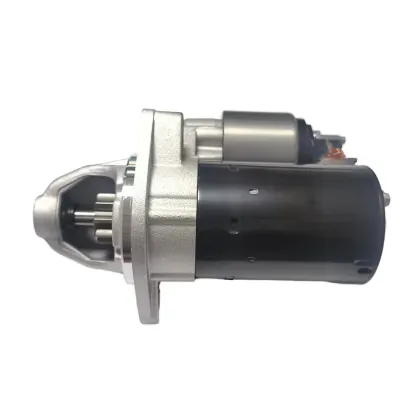
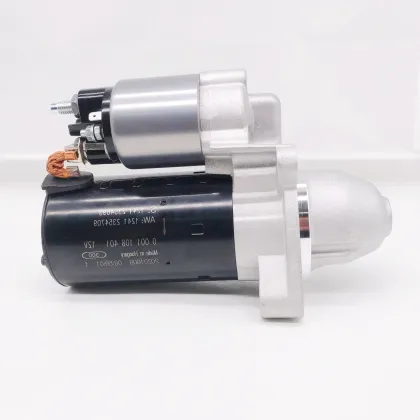
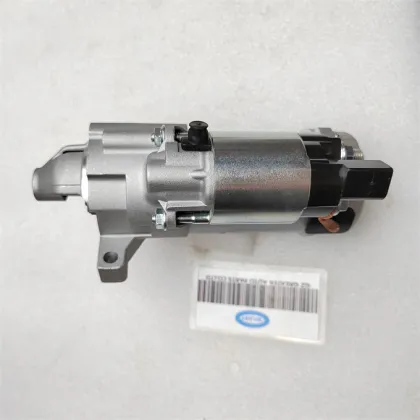
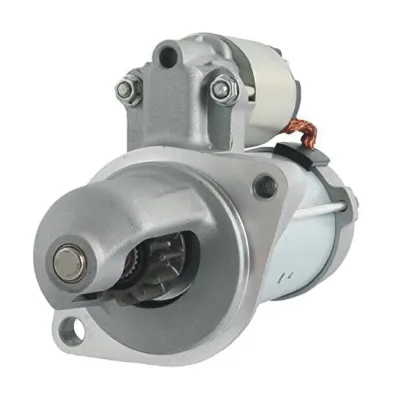
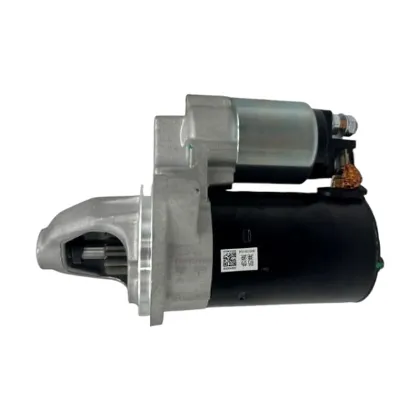
BMW fitted several different starters to similar engines, and the number can change with build date, transmission and auto start-stop. Read the number on your old starter, and confirm it against your VIN in a BMW parts catalog before ordering. The BMW starters we carry:
- 12412354701 (12 41 2 354 701) is listed for the 2006–2016 six-cylinder generation with N51, N52, N54 and N55 engines: 128i and 135i, E90–E93 3 Series, E60/E61 and some F10 5 Series, 740i/740Li (2011–2012), X1 xDrive35i, X3, X5 3.0si/xDrive30i, X6 xDrive35i (2008–2010) and Z4. Some retailers limit it to cars built before a certain production date on some models, so the VIN check matters here.
- 12417631558 is listed for the N55 in the F30 335i, F32/F33/F36 435i, F10 535i (2014–2016) and 535i GT.
- 12417579155 is listed for the X5 and X6 xDrive35i (E70/E71, 2011–2014), the 535i GT (2010–2013) and the Z4 sDrive28i (2012–2016). Some retailers list it for cars without auto start-stop only.
- 12418671505, which also replaces 12418691852, is listed for 2019–2025 models with the 3.0 L six-cylinder B58, such as the M340i, 540i, 740i, 840i, X3 M40i, X5 and X6 40i, X7 40i and Z4, and for the S58 in the M2, M3, M4, X3 M and X4 M of the listed years. The V8 X5 M and X6 M use a different starter.
- 12412354709 is listed for older models from 1991 to 2006: E30, E36 and E46 3 Series (including the E36 M3), the E34 525iT, E39 528i and 530i, and the Z3 and Z3 M.
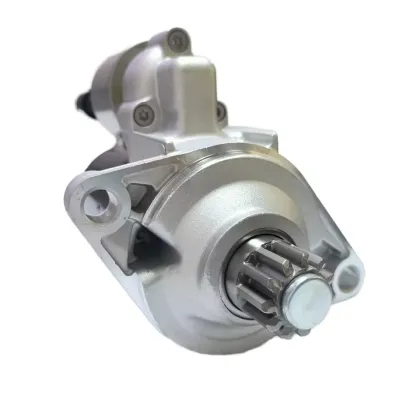
We also carry one Audi starter, 02E911023J (also 02E911023S), listed for A3, S3, TT and TTS models with 1.8 L and 2.0 L engines; see the product page for years. Browse all starters or the BMW catalog.
Replacement overview and difficulty
Difficulty: intermediate to advanced on most BMW six-cylinders. On the N51/N52 and the older M54, the starter sits under the intake manifold, and the usual approach is to remove the air intake and lift or remove the manifold to reach it. Owners report getting it out with long extensions instead, with mixed results. The N54 and N55 are similarly cramped. Read the procedure for your exact engine before you start, and expect a long job if you have not done it before.
- Disconnect the negative battery cable first, and keep the main starter cable away from metal once it is loose.
- Support the car on proper stands if you work from below; never under a jack alone.
- BMW often uses aluminum bolts in this area. Factory procedures call for replacing aluminum fasteners rather than reusing them, so buy new bolts with the starter.
- If you remove the intake manifold, replace its gaskets and inspect the brittle plastic hoses around it. A vacuum leak after the job causes rough running and lean codes.
- Tighten the main cable nut properly. A loose terminal recreates the original no-crank problem and can overheat.
Before you condemn a starter that has been slow, make sure the battery is healthy. A tired battery makes even a new starter crank slowly. If you replace the battery too, BMWs with intelligent battery sensing expect the new battery to be registered with a scan tool.
Repair or replace?
Rebuilding a starter is possible in principle, but on these cars most of the cost is the labor to remove and refit it, so most owners replace the whole unit. The starters in our catalog are aftermarket replacements listed against the BMW numbers shown, not genuine BMW or remanufactured BMW exchange units. Match the number, confirm by VIN, and if the old starter is original and the car is high-mileage, consider whether the time spent on access is a good moment to replace other worn parts in the same area.