BMW In-Tank (Low-Pressure) Fuel Pump Failure: Symptoms, Diagnosis and Replacement
What the in-tank fuel pump does
Every gasoline BMW has an electric fuel pump inside the fuel tank. On port-injected engines, such as the N52 six-cylinder and older engines, it supplies the injectors directly. On direct-injection engines, such as the N20, N54, N55 and later, it is the first of two pumps: the in-tank pump, often called the low-pressure fuel pump (LPFP), feeds fuel forward at a few bar to the engine-mounted high-pressure fuel pump (HPFP), which raises it to injection pressure. If the in-tank pump is weak, the HPFP is starved and cannot do its job.
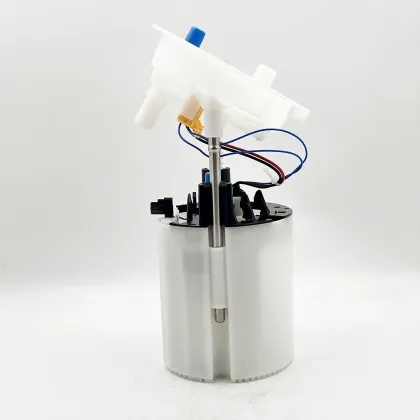
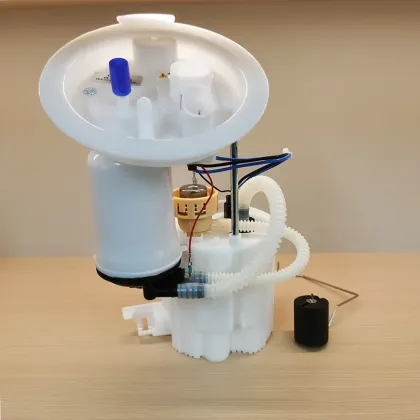
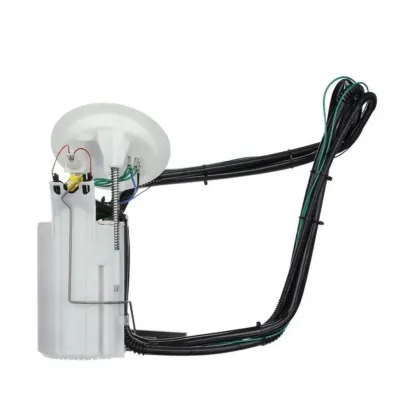
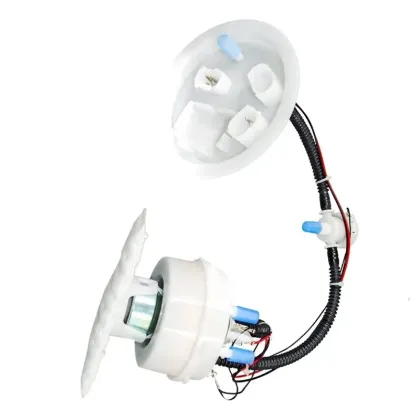
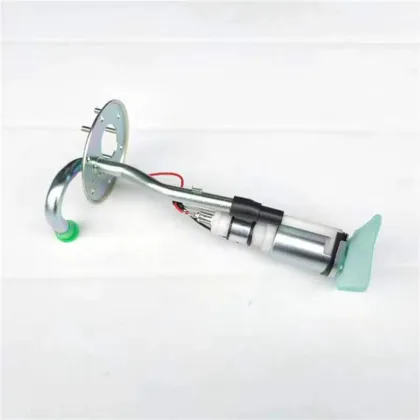
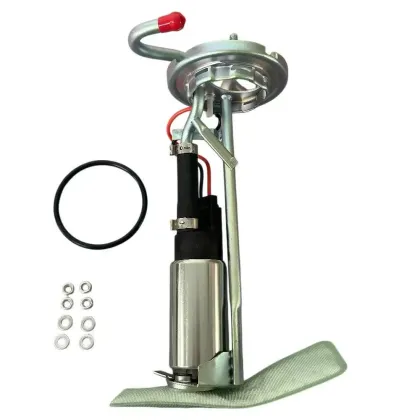
On most newer BMWs the pump is part of a module that also holds a filter screen and the fuel level sender. Many models from the E90 generation on use a saddle-shaped tank that straddles the driveshaft. The pump module sits in one half, usually the right, and a separate unit with another level sender sits in the other. On many of these cars the pump is not switched simply on and off: a fuel pump control module (FPCM) varies its speed on the engine computer’s command.
Symptoms of a failing in-tank pump
- Long cranking before the engine starts, or a start followed by a stall.
- Hesitation, surging or loss of power under hard acceleration or at sustained highway speed, when fuel demand is highest.
- Stalling while driving, sometimes with a normal restart after a few minutes.
- No start at all, with no hum from the tank when the ignition is switched on.
- A louder whine or buzz from under the rear seat than the car used to make.
- A fuel gauge that reads wrong or jumps, if the level sender in the same module is worn.
- A Check Engine light with low fuel pressure, fuel pump circuit or lean mixture codes, sometimes with a drivetrain malfunction message and reduced power.
Stalling at speed is a safety issue: you lose engine power, brake and steering assist can be reduced, and you may be stuck in traffic. If the car stalls while driving, have it diagnosed before you rely on it again.
In-tank pump, HPFP or FPCM: how to diagnose it
These three parts cause overlapping symptoms, so test before you buy. Generic codes that can appear include P0087 (fuel rail or system pressure too low), P0230 (fuel pump primary circuit), P0627 (fuel pump A control circuit open) and, on port-injected engines, P0171 and P0174 (system too lean). BMW engines also store their own manufacturer-specific codes for low-side fuel pressure and the pump control circuit.
- Work safely. Gasoline vapor is explosive. Work outdoors or in a well-ventilated space, with no flames, sparks or smoking nearby, and keep a fire extinguisher rated for fuel fires within reach. The fuel system holds pressure even with the engine off.
- Read the fault memory with a BMW-capable scan tool, not only a generic code reader, and note which side of the fuel system the codes refer to.
- Listen for the pump when the ignition is switched on. Silence points to the pump, its power supply, the FPCM or the wiring.
- Check fuses, connectors and, where fitted, the FPCM. A failed module or corroded connection can stop a good pump; see our FPCM guide.
- Measure low-side pressure with a gauge on the supply line, or on direct-injection engines with a low-pressure sensor, read actual against target in live data. Pressure that is low or drops under load points to the in-tank pump or a restriction.
- If low-side pressure is steady but rail pressure is low, look at the high-pressure pump instead.
Matching the part: OEM number, side and VIN
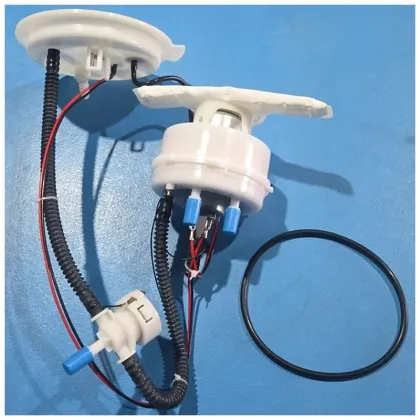
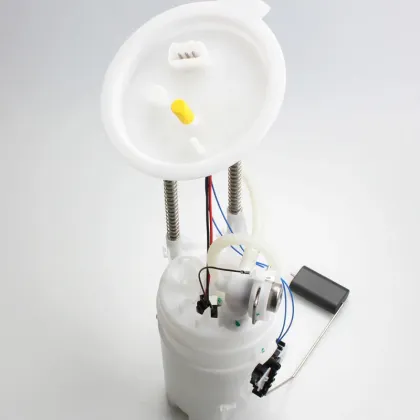
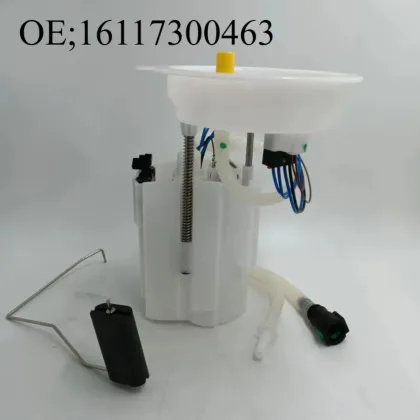
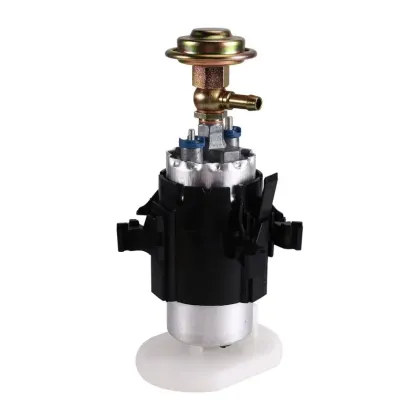
BMW used many different pumps and modules, and on saddle tanks the left and right units are different parts. Compare the number on your old module, check which side it came from, and confirm it by VIN in a BMW parts catalog. The in-tank pumps we carry:
- 16147163298 (16 14 7 163 298) is the right-side pump with sending unit for the E82/E88 1 Series (128i, 135i, 1 Series M), E90–E93 3 Series (2006–2013) and the 2013–2015 E84 X1.
- 16117243975 is listed for the 2012–2018 F22/F23, F30/F31/F34 and F32/F33/F36 cars with N20, N26 or N55 engines (228i, 320i, 328i, 335i, 428i, 435i, M235i) and the 2016–2018 M2.
- 16117373503 is the right in-tank pump for the E60/E61 5 Series, 2006–2010 (525i to 550i).
- 16117341301 is listed for the F10 528i and 535i, F07 535i GT and F06/F12/F13 640i; 16117434206 (also 16117260644 and 16117434205) is listed for the 2010–2011 F10 528i and the 2016–2017 640i coupe.
- 16117314804 is the right-side pump for the 2011–2017 F25 X3; the left side is a different number.
- 16117300463 is listed for the F48 X1 (2016–2022) and F39 X2 (2018–2023), including the X2 M35i.
- For classic BMWs: 16141181354 for the E34 5 Series and E32 735i, 16141179425 for E12/E28 5 Series and E24 6 Series, and 16141180233 for the 1991 E30 318i and 318is.
Some BMW fuel pump listings in our catalog are high-pressure pumps (13 51 numbers); those belong to the HPFP, not the tank. Browse all BMW fuel pumps or the BMW catalog.
Replacement overview, difficulty and safety
Difficulty: intermediate. On most BMW sedans, coupes and many X models the pump is reached from inside the car: remove the rear seat cushion, fold back the insulation and remove an access cover in the floor. The tank does not usually need to come out. Older models can differ, and some used more than one pump, so check the procedure for your car.
- Run the tank low before the job, or have fuel drained, so less fuel is near the opening.
- Disconnect the battery, and relieve fuel pressure as the service procedure describes before you open any line.
- Use a proper lock ring tool. Hammering the ring with a punch can crack the plastic flange or the tank neck.
- Lift the module out slowly and at an angle so you do not bend the float arm of the level sender.
- Fit a new seal ring, make sure the module is seated and the ring is fully locked, and reconnect lines until they click.
- Before refitting the cover, switch on the ignition, check for leaks and fuel smell, and confirm the fuel gauge reads sensibly.
OEM versus aftermarket
A fuel pump that stops on the highway is more than an inconvenience, so buy carefully. The pumps in our catalog are aftermarket replacements listed against the BMW numbers shown, not genuine BMW parts. Match the OEM number and side exactly, use new seals, and if the old pump failed because of debris or rust in the tank, clean the tank before fitting the new one.