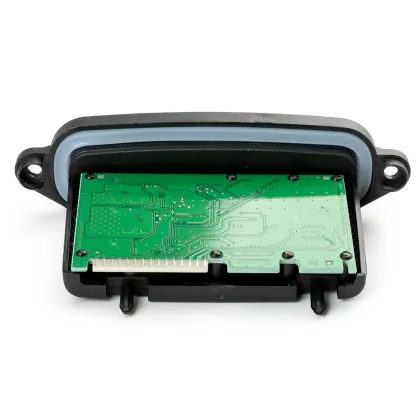
BMW Headlight Driver Module Failure: Flickering, Dead Headlights and Replacement
What the headlight module does
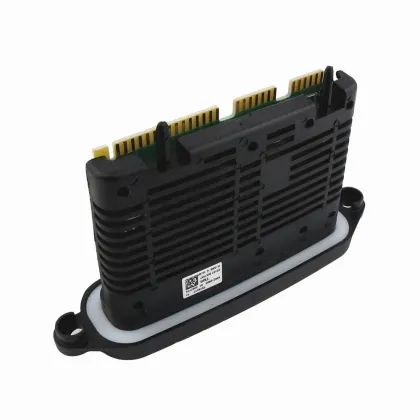
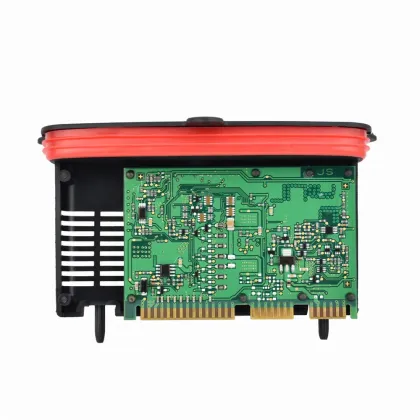
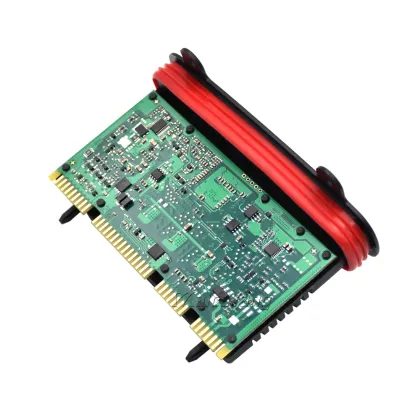
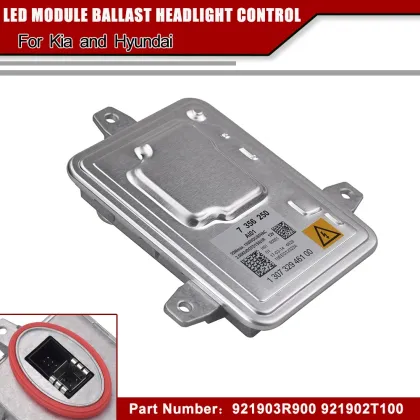
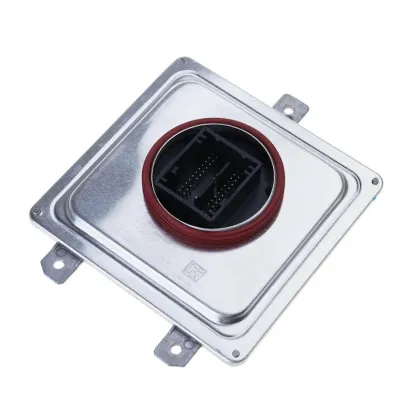
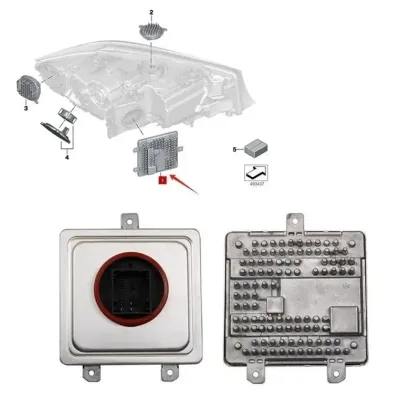
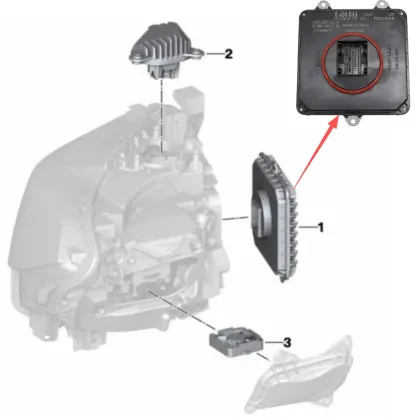
Many BMWs with xenon or LED headlights do not feed the lamps straight from the wiring harness. A control module in or behind each headlight, called the headlight driver module, ballast, or light control unit, handles the electronics. For xenon lights it creates the high-voltage pulse that ignites the bulb and then regulates its current. For LED systems it drives the LEDs and handles functions such as the turn signal LED module. On cars with adaptive headlights (AHL) a module also moves the beam with the steering, and the front light electronics unit coordinates the lamps with the rest of the car.
These modules live in a hot, damp, vibrating spot, and they are a well-known reason a BMW loses a headlight even though the bulb is fine.
Symptoms of a failing module
- One headlight does not come on, or works only for a few seconds.
- Flickering, flashing or a headlight that turns off and on by itself.
- A pinkish or dim light from a xenon lamp that previously looked normal.
- An instrument cluster message about a lighting fault, a low beam failure or an adaptive headlight malfunction.
- A cornering light or adaptive function that stops working.
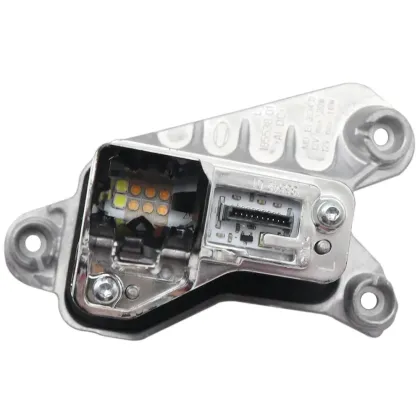
- A turn signal that stays on, flashes quickly (hyper-flash) or does not light, on cars with an LED turn signal module.
A faulty bulb, a corroded connector or water in the headlight housing can produce the same result, so look at those first.
How to diagnose it
- Swap checks first. If you have a xenon car with two similar headlights, swapping the bulb from the working side to the dead side shows quickly whether the bulb is the cause.
- Inspect the housing and connectors for moisture, condensation, green corrosion and burnt marks. Water ingress is a common cause of module failure and must be solved or it will repeat.
- Check the fuse for the headlight circuit.
- Read the fault memory with a BMW-capable scan tool. It will normally say which side and which function is faulty. Cheap code readers often cannot see the lighting modules.
- If the bulb, fuse and wiring test fine and the code points to the module, replacement is the logical step. For LED systems, where the LEDs may be part of the headlight unit, ask whether the module is sold separately.
Matching the part: OEM number and VIN
BMW has used many module numbers, which differ by model, year, and whether the car has halogen, xenon, AHL or LED headlights. A module for a xenon lamp will not drive an LED. Verify the OEM number against your VIN in a BMW parts catalog, and compare it with the label on the module before you order.
- 63117316217 is a headlight driver module for AHL xenon lights, listed for the 2010–2013 F10 528i, 535i and 550i (it is also used on the F07 5 Series GT).
- 63117267045 is the halogen headlight driver module for the same 2010–2013 528i, 535i and 550i; BMW lists 63117304906 as its replacement.
- 63117316187 is a xenon driver module (non-adaptive) listed for F-series cars such as the 428i, and 63117317408 is a xenon light control unit listed for several F-series models including the 320i and 328d; fitment varies, so check the VIN.
- 63117440878 is an LED headlight driver module and 63117352553 is the left LED turn signal module, both listed for the F10 5 Series (528i, 535i).
- 63118494844 is an FLE2 front light electronics control unit, and 63115A0AF90 and 63115A0AFB0 are FLM2 control units, listed for newer F- and G-series cars; each covers many variants, so match them by VIN.
Browse all BMW light control modules and the BMW catalog.
Replacement overview, difficulty and safety
Difficulty: beginner to intermediate for most driver modules, which attach to the underside or rear of the headlight housing. Some cars require removing the front bumper or the headlight assembly to reach the module. Control units for adaptive or LED systems may need coding to the car afterwards. Allow one to two hours.
- Xenon systems create very high voltage when the lamp ignites. Switch the headlights off, disconnect the battery and wait several minutes before unplugging anything. Never handle the module or bulb with the lights on.
- Do not touch a new bulb’s glass with bare hands.
- Photograph the connectors and routing before removal, and check that the seals and covers go back on properly. A badly sealed housing lets water in.
- Fix the cause of moisture, such as a cracked housing or a missing cap.
- Reconnect the battery, switch on the lights and check low beam, high beam, turn signals and any adaptive functions.
- Ask whether your car needs the new module to be coded. LED and adaptive modules often do.
OEM versus aftermarket: an honest view
Genuine BMW modules and those from the original suppliers have the best record, at the highest prices. The modules listed here are aftermarket replacements for the BMW OEM numbers shown, not genuine BMW parts. Electronics are where cheap parts most often disappoint, so choose carefully, check the number against your VIN and ask whether coding is needed. Confirm warranty terms with the seller before you order.