Audi Throttle Body Problems: EPC Light, Limp Mode and Idle Issues, Cleaning, Adaptation and Replacement
What the throttle body does
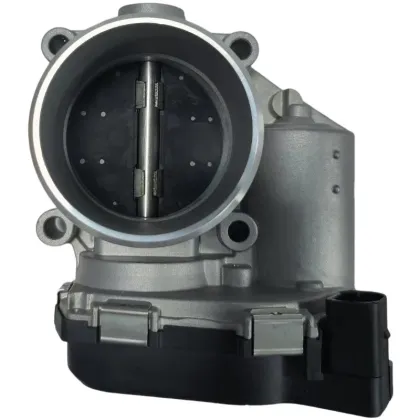
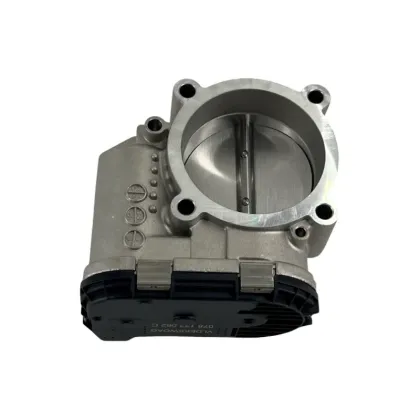
The throttle body is the valve that controls how much air enters the engine. On Audis it is electronic (drive-by-wire): the accelerator pedal has its own position sensors, the engine computer decides how far to open the throttle, and a small electric motor in the throttle body turns the plate. Two position sensors inside report the plate angle back, so the computer can compare where the plate is with where it should be.
When the two do not agree, or the sensors disagree with each other, the computer treats it as a safety problem. It turns on the EPC (Electronic Power Control) light and usually limits power. That is why throttle body faults often show up as a sudden loss of power rather than a gradual change.
Symptoms of a throttle body problem
- The EPC light comes on, often together with the check engine light.
- Limp mode: the engine responds weakly or barely at all to the pedal, and the rpm may be limited.
- A rough, hunting or too-high idle, or an idle that drops and recovers.
- Stalling when you come to a stop, or a hard restart afterwards.
- Hesitation or a delayed response when you press the pedal from a stop.
The EPC light is not specific to the throttle body. A faulty accelerator pedal sensor, brake light switch, ignition or misfire problem, or wiring fault can also turn it on. Read the codes before you buy parts.
Fault codes and how to diagnose
Read the engine fault memory with a scan tool, preferably one that can show Audi live data and run Basic Settings. Generic throttle-related codes include P2101 (throttle actuator control motor circuit range/performance), P0121 and P0221 (throttle/pedal position sensor A or B range/performance), P0122, P0123, P0222 and P0223 (sensor circuit low or high), P2135 (sensor A/B voltage correlation), P0638 (throttle actuator control range/performance, Bank 1) and P0507 (idle rpm higher than expected). Then:
- Safety first. Switch the ignition off before you touch the throttle body, and keep your fingers away from the plate: with the ignition on, the motor can move it without warning.
- Remove the intake duct and look inside. A ring of black carbon or oily residue around the plate can stop it from closing properly and upset the idle.
- Check the connector and wiring for damage, corrosion and loose pins. Wiggle the harness with the engine running and watch for a change.
- Check for vacuum leaks and a split intake duct. Unmetered air causes a high or unstable idle on its own.
- In live data, compare the specified and actual throttle angle and the two sensor signals. A lag, a gap or a jump points to a sticking plate, a worn motor or a sensor fault inside the unit.
- Clean the throttle body if it is dirty, then run the throttle body adaptation. If the codes return, the motor or sensors are worn and replacement is the fix.
Matching the throttle body: OEM number and VIN
Audi throttle bodies differ by engine family, and several numbers have been superseded over the years. Read the number on your old unit and confirm the current OEM number against your VIN before you order.
- 06F133062AG (also written 06F 133 062 AG) is the current number for the 2.0 L four-cylinder TFSI throttle body and replaces 06F133062T and 06F133062Q. It is listed for the A4 (2005–2016), A5 (2010–2017), A6 (2012–2018), allroad, Q3 (2015–2024), Q5 (2011–2017), S3 (2015–2020), TT and TTS, and the 2016 S4.
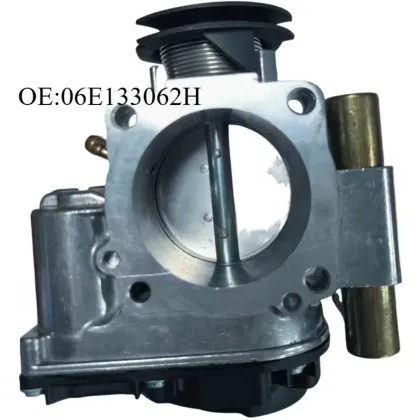
- 06E133062H is listed for V6 engines from 2008 to 2018: the 3.2 L A5 and Q5 and the 3.0 L A6, A7, A8, Q5, S4, S5 and SQ5.
- 079133062C replaces 078133062C and is listed for the 2.7 L and 3.2 L V6 in the A4, A6 and allroad of about 2000–2009, and is also listed for the S6 5.2 L and the R8. V8 and V10 engines have used other throttle body numbers too, so on those cars confirm the number by VIN before you order.
Browse all Audi throttle bodies and the Audi catalog. Each product page lists fitment by model, year and engine.
Cleaning, replacement and adaptation
Difficulty: beginner to intermediate. On most of these engines the throttle body is at the front of the intake, held by a few bolts and one connector behind the intake duct. The work itself is short; the adaptation is the step people skip.
- Let the engine cool and switch the ignition off. Disconnecting the battery is a sensible precaution while the connector is off, but note that it can also mean the throttle needs to be adapted again.
- Remove the intake duct and unplug the connector. For cleaning, you can often leave the unit installed; for replacement, remove the bolts.
- Clean with a throttle body cleaner that is safe for sensors and coatings. Spray it on a cloth rather than into the unit, wipe the bore and plate, and do not force the plate open by hand or soak the unit, because the gears and motor can be damaged.
- If replacing, fit a new gasket or O-ring and check the intake duct for splits.
- Run the throttle body adaptation (Audi calls it throttle valve adaptation; VCDS users know it as Throttle Body Alignment). With the ignition on and engine off, a capable scan tool runs it from the engine module's Basic Settings while the throttle cycles by itself. Do not touch the pedal during the procedure.
- Clear the codes, start the engine and let it idle, then take a short drive. The idle may take a little while to settle as the engine computer learns again.
Audi and tool-maker procedures call for adaptation after a throttle body is cleaned, removed or replaced, and after the battery or engine computer has been disconnected. A rough idle right after the job is often just a missing adaptation.
Clean or replace?
If the plate is dirty and the codes point to idle or airflow, cleaning and adaptation often fix it. If you have motor or position sensor codes, or the problem returns after a correct cleaning and adaptation, the unit is worn inside and should be replaced; the motor and sensors are built into the throttle body. The throttle bodies listed here are aftermarket replacements for the OEM numbers shown, not genuine Audi parts.