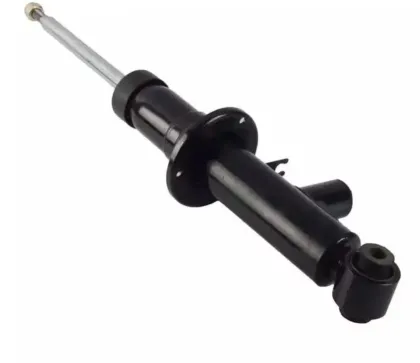
Audi Shock Absorber and Strut Replacement: Worn Damper Symptoms, Adaptive and Air Struts
What shock absorbers and struts do
The spring holds the car up; the shock absorber, or damper, controls how fast the spring compresses and rebounds. Without damping, the body keeps bouncing after a bump, the tires lose grip on rough roads and the car leans and dives more. A strut is a damper that also locates the wheel and carries the spring or air spring as part of the suspension.
Audi fits several kinds of damper, and they are not interchangeable:
- Conventional gas-pressure dampers, with fixed valving and no wiring.
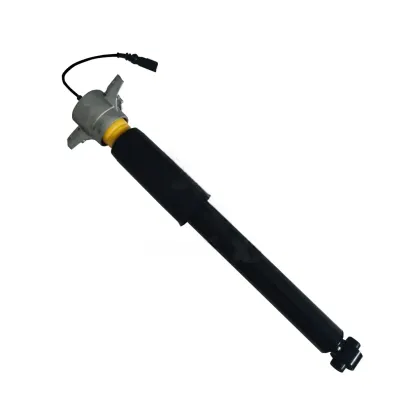
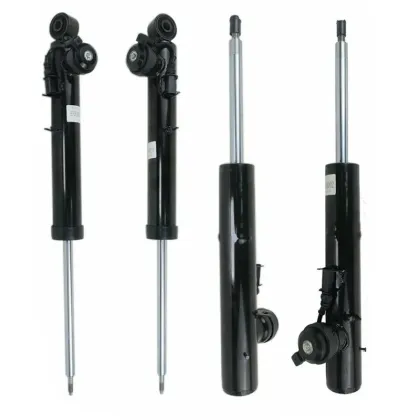
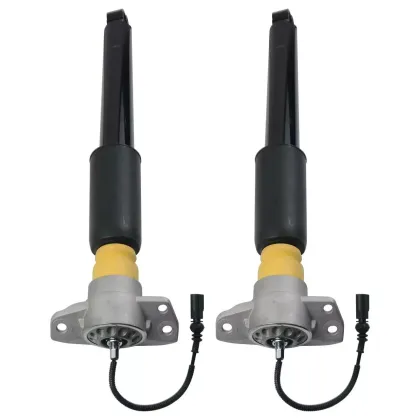
- Electronically controlled dampers, used with adaptive damping, Audi drive select or adaptive air suspension. An electric valve in the damper changes its stiffness, so the unit has a wiring connector.
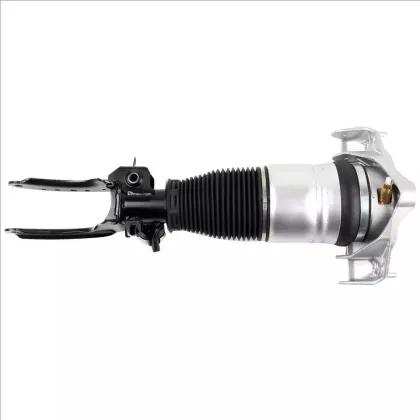
- Air struts, which combine a damper with a rubber air spring, so the car can raise, lower and level itself.
- Audi magnetic ride dampers, filled with a magnetorheological fluid whose resistance changes in a magnetic field. Audi used them on the TT, R8 and A3 families.
None of the Audi parts we list are magnetic ride units. Each of them is electronically controlled, and one is a complete air strut. Check which system your car has before you buy anything.
Symptoms of worn dampers
- The car keeps bouncing after a dip or bump, or floats and wallows at highway speed.
- More nose dive under braking, squat under acceleration or body roll in corners.
- The car feels nervous on rough roads or in crosswinds, and stopping on a bumpy road takes longer.
- Wet oil streaks down the damper body, rather than a light dusty film.
- Knocking or clunking over bumps, which can also come from top mounts, bushings or sway bar links.
- Cupped or scalloped tire wear.
- On electronic dampers: a suspension warning in the cluster, a stored fault, or a ride that no longer changes between drive select modes.
- On air struts: one corner sagging after the car sits, a hiss from the strut, or the compressor running more often than before.
Dampers wear slowly, so many owners only notice how bad the old ones were after the new ones go in.
How to diagnose it
- Park on level ground and look at the ride height side to side and front to rear. On an air-suspension car, compare it again after the car has stood overnight.
- Inspect each damper for wet oil, a dented body, a bent rod or damaged dust boots, and check the top mounts and lower bushings for cracks.
- Check the parts that cause the same noises: sway bar links, control arm bushings, ball joints and wheel bearings.
- Read the fault memory of the suspension or damping control module with an Audi-capable scan tool. Electronic dampers report open or shorted valves, and many faults point to a corroded connector or chafed wire rather than the damper itself.
- For an air strut, spray soapy water on the air spring and the line fitting with the system pressurized and look for bubbles.
- Raise the car only with the lift or jack mode switched on if it has air suspension, so the system does not try to level itself while the wheels hang.
Matching the part: OEM number and VIN
Audi dampers differ by suspension option, axle, side and build date, and the option code on the car decides the part more than the model name does. Read the number on your old damper and check it against your VIN in an Audi parts catalog. The numbers we list:
- 8F0513025A (8F0 513 025 A) is an electronically controlled rear damper, listed by dealers as the left side, for B8 A4, A5, S4 and S5 models with adaptive damping. It only fits cars that have that option and its connector.
- 4G0616031AE is the rear damper for C7 A6, A7, S6 and S7 models with adaptive air suspension, where the rear air spring is a separate part. It is electronically controlled and does not fit cars with steel springs.
- 7L8616019G is a complete rear air strut, damper and air spring together, for the first-generation (2007–2015) Q7 with air suspension. Dealer catalogs list it as the left side.
- 4M0616031AT is the electronically adjustable rear damper listed for the Q8, SQ8 and RS Q8 with four-corner air suspension; dealer catalogs tie it to a build-date range, so check by VIN.
- 37116797025 is a front left strut with electronic damper control for the BMW X3 (F25) and X4 (F26); 37116797027 is the matching right side. It only fits cars with that option.
See all shock absorbers and the Audi catalog. If your Audi has steel springs and no damper connector, it needs conventional dampers instead.
Replacement overview, difficulty and safety
Difficulty: intermediate for a rear damper, advanced for air struts and front struts. You need a lift or sturdy stands, the right sockets and, for electronic and air units, a diagnostic tool.
- Never take a coil-spring strut apart without a proper spring compressor rated for the job. A compressed spring stores enough energy to cause serious injury.
- Air struts hold pressure. Switch on the lift or jack mode, and vent or isolate the strut as the repair procedure directs before you disconnect the air line.
- Support the car on stands, not on the jack, before you work under it.
- Replace dampers in pairs on the same axle so the car stays balanced.
- Disconnect the battery or the damper connector as the procedure directs, and inspect the connector for corrosion before you plug in the new unit.
- Many Audi suspension bolts must be tightened with the suspension at normal ride height, as the repair manual specifies. Tightening them with the wheel hanging can preload and tear the rubber bushings.
- Afterwards, clear the fault memory, run any ride height or level calibration the system needs and have the alignment checked.
Choosing between adaptive and conventional dampers
Some owners convert from electronic or air suspension to conventional dampers and springs, but that takes a matched kit and usually coding or a module to stop the warning lights. Replacing like for like is simpler and keeps the original ride and drive select modes. The parts we list are aftermarket replacements matched to the OEM numbers shown, not genuine Audi or BMW parts. We do not state warranty or stock terms on this page; ask us to confirm them before you order.