Audi Oil Pump Failure: Low Oil Pressure Warning, Symptoms and Replacement
What the oil pump does
The oil pump draws oil from the pan through a pickup tube with a screen and pushes it under pressure through the filter to the crankshaft and camshaft bearings, the timing chain tensioners, the variable valve timing and, on turbo engines, the turbocharger. Without pressure, these parts lose their oil film within seconds.
On the 1.8 L turbo and the 2.0 L TFSI four-cylinders, the pump sits low in the engine and is chain-driven from the crankshaft. Many 2.0 TFSI engines use a two-stage pump: an oil pressure control valve switches it between a lower and a higher pressure, and two oil pressure switches tell the engine computer which stage it is in. On the 3.2 L V6, the pump sits in the oil pan and is driven through a shaft; check the manual for the 3.0 L supercharged engine.
Warning signs and symptoms
- A red, often flashing, oil can symbol with a message to switch off the engine. This is the oil pressure warning.
- The warning appears at idle with a hot engine and goes away when you rev it. Low pressure usually shows first at hot idle.
- Rattling at start-up or louder valvetrain and timing chain noise, as tensioners and lifters are starved of oil.
- Oil pressure codes such as P0524 (engine oil pressure too low), or P0520 and P0521 (oil pressure sensor or switch circuit, and range/performance).
- Metal particles on the oil filter or in the drained oil.
Do not confuse the red warning with the yellow oil can, which on Audis means the oil level is low or the level sensor has a fault. Top up for a yellow warning; for a red one, stop.
What to do and how to diagnose
Low oil pressure destroys engines quickly, and the pump is only one of several possible causes. Work through them in order:
- Safety first. If the red oil pressure warning comes on, pull over safely and switch off the engine. Do not keep driving or let it idle to see if the light goes out. Have the car towed if the warning returns.
- Check the oil level on level ground with the engine off for a few minutes. Some Audi engines use a noticeable amount of oil between changes, and a low level alone can trigger the warning. Top up with oil that meets the specification in your owner's manual.
- If the level is correct, suspect the oil pressure switches and wiring. A failed switch or a connector with oil in it can give a false warning. On two-stage engines, the pressure control valve can also stick.
- Measure the real pressure with a mechanical gauge screwed in place of a pressure switch, with the engine at operating temperature, and compare the readings at idle and at higher rpm with the factory specification.
- If the pressure is truly low, drop the oil pan and inspect the pickup screen. Sludge or gasket debris on the screen is a known problem on the 1.8 L turbo and can starve a healthy pump.
- Look for debris in the pan and check the pump, its drive chain and tensioner. Replace the pump if it is worn, damaged or if a clogged screen has run it dry.
Matching the pump: OEM number and VIN
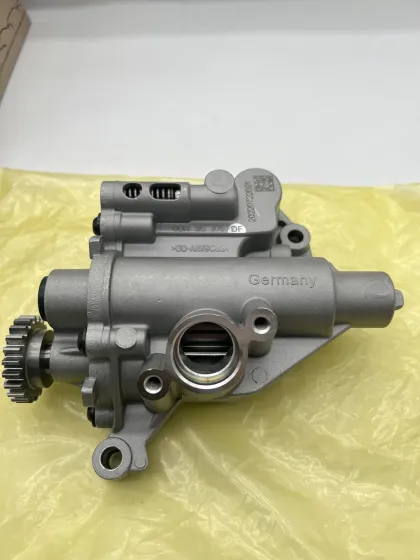
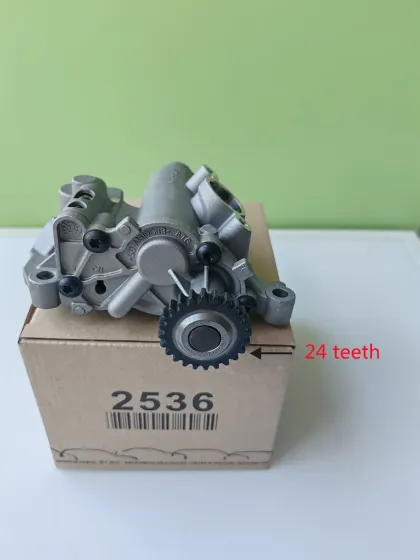
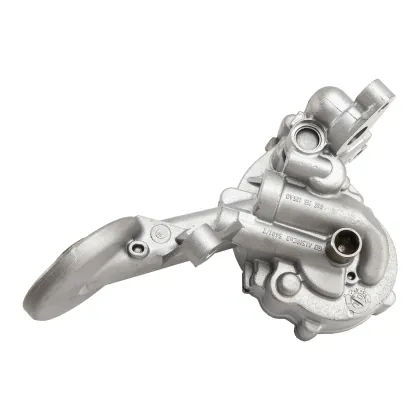
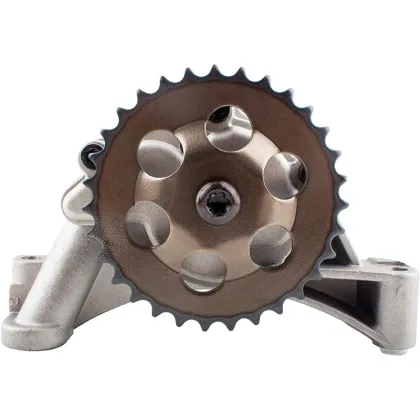
Audi oil pumps differ by engine family and, on the 2.0 TFSI, between generations. Read the number on your old pump if you can and confirm the OEM number against your VIN before you order.
- 06A115105B (also written 06A 115 105 B) is listed for the 1.8 L turbo four-cylinder in the 2002–2006 A4 and A4 Quattro and the 2000–2006 TT and TT Quattro.
- 06H115105DF is listed for the 2.0 L TFSI four-cylinder in the 2012–2016 A4, 2012–2017 A5, 2013–2016 allroad and 2012–2017 Q5, including the Q5 hybrid. It replaces earlier numbers such as 06H115105AK and 06H115105AM.
- 06H115105GC is listed for the 1.8 L and 2.0 L turbo four-cylinders in the 2015–2017 A3 and A3 Quattro. It is a different pump from the 06H115105DF, despite the similar number.
- 06E115105AD is listed for the V6 engines of roughly 2008–2012: the 3.2 L in the A4, A5, A6 and Q5, and the 3.0 L supercharged engine in the A6, S4 and S5.
Browse all Audi oil pumps and the Audi catalog. Each product page lists fitment by model, year and engine.
Replacement overview and difficulty
Difficulty: advanced. On the four-cylinder engines the pump is reached by removing the oil pan, which can mean lowering or supporting the front subframe on some models; the pump's drive chain and tensioner then have to come off. On the 3.2 L V6, Audi's procedure starts by removing the lower section of the oil pan and pulling the pump off its drive shaft. A repair manual, the correct sealants and a torque wrench are essential.
- Work on a cold engine, support the car securely on jack stands or a lift, and disconnect the battery.
- Drain the oil and catch it in a clean pan so you can look for metal debris.
- Clean or replace the pickup tube and screen, and clean the inside of the pan thoroughly.
- Fit the new pump with new O-rings or seals, inspect the drive chain and tensioner and replace them if worn, and tighten everything to the manual's torque values.
- Refit the pan with the specified sealant or gasket, fit a new oil filter and fill with the correct oil.
- Before starting, follow the manual's priming procedure if one is given. Then start the engine, confirm that the warning goes out within seconds and check pressure with a gauge if you can.
Pump, switch or engine damage?
Many low-pressure warnings turn out to be a low oil level or a faulty switch, which are cheap fixes. A real loss of pressure is different: if the engine ran with the warning on, the bearings, turbocharger or timing chain components may already be damaged, and a new pump will not repair that. Knocking from the bottom end after the event is a bad sign. If you find heavy debris, have the engine inspected before you invest in the repair. The pumps listed here are aftermarket replacements for the OEM numbers shown, not genuine Audi parts.